Of all the nutrition advice aimed at people trying to lose weight, “eat more fiber” might be the least glamorous — and one of the most useful. Fiber does not burn fat, speed up your metabolism in any dramatic way, or melt anything away. What it does is simpler and, for most people, more valuable: it helps you feel genuinely full on fewer calories, so eating a little less stops feeling like a daily battle of willpower.
The average American adult gets only about 15 grams of fiber a day, roughly half of what nutrition guidelines recommend. Closing that gap with ordinary, affordable foods is one of the most realistic changes you can make. This guide explains how fiber helps with weight management, which foods deliver the most of it, and how to add them gradually so your digestion stays comfortable.
Why Fiber Helps With Weight Loss
Fiber is the part of plant foods your body cannot fully digest. Because it passes through your system largely intact, it helps with weight management in several practical ways:
- It adds bulk without calories. High-fiber foods take up more room in your stomach for the same calorie count, which triggers fullness signals sooner. A cup of lentils and a cup of white rice may look similar on the plate, but the lentils will keep you satisfied far longer.
- It slows digestion. Soluble fiber forms a gel in the gut that slows how quickly food leaves the stomach and how quickly sugars are absorbed. That means steadier energy and fewer sharp hunger swings an hour after eating.
- It makes you chew more. Whole, fibrous foods take longer to eat than soft, processed ones, giving fullness hormones time to catch up before you have overeaten.
- It feeds your gut microbes. The bacteria in your large intestine ferment fiber and produce compounds linked to better appetite regulation and metabolic health. It is an active area of research, but the direction of the evidence is consistently positive.
None of this makes fiber a weight-loss drug. Think of it as making the overall project easier: meals satisfy you, snacks call your name less often, and a modest calorie deficit becomes something you can actually live with.
How Much Fiber Do You Actually Need?
General US guidance suggests around 28 grams per day for women and 38 grams per day for men, based on a typical calorie intake — or roughly 14 grams for every 1,000 calories you eat. Most people do not need a scale or an app to get there; swapping a few foods a day usually closes most of the gap.
Two honest notes. First, most of your fiber should come from food rather than supplements, because whole foods bring water, vitamins, minerals and protein along with the fiber. Second, more is not unlimited better — suddenly doubling your intake is the classic recipe for gas and bloating, which we cover below.
The Best High-Fiber Foods to Add First
Legumes: Lentils, Beans and Chickpeas
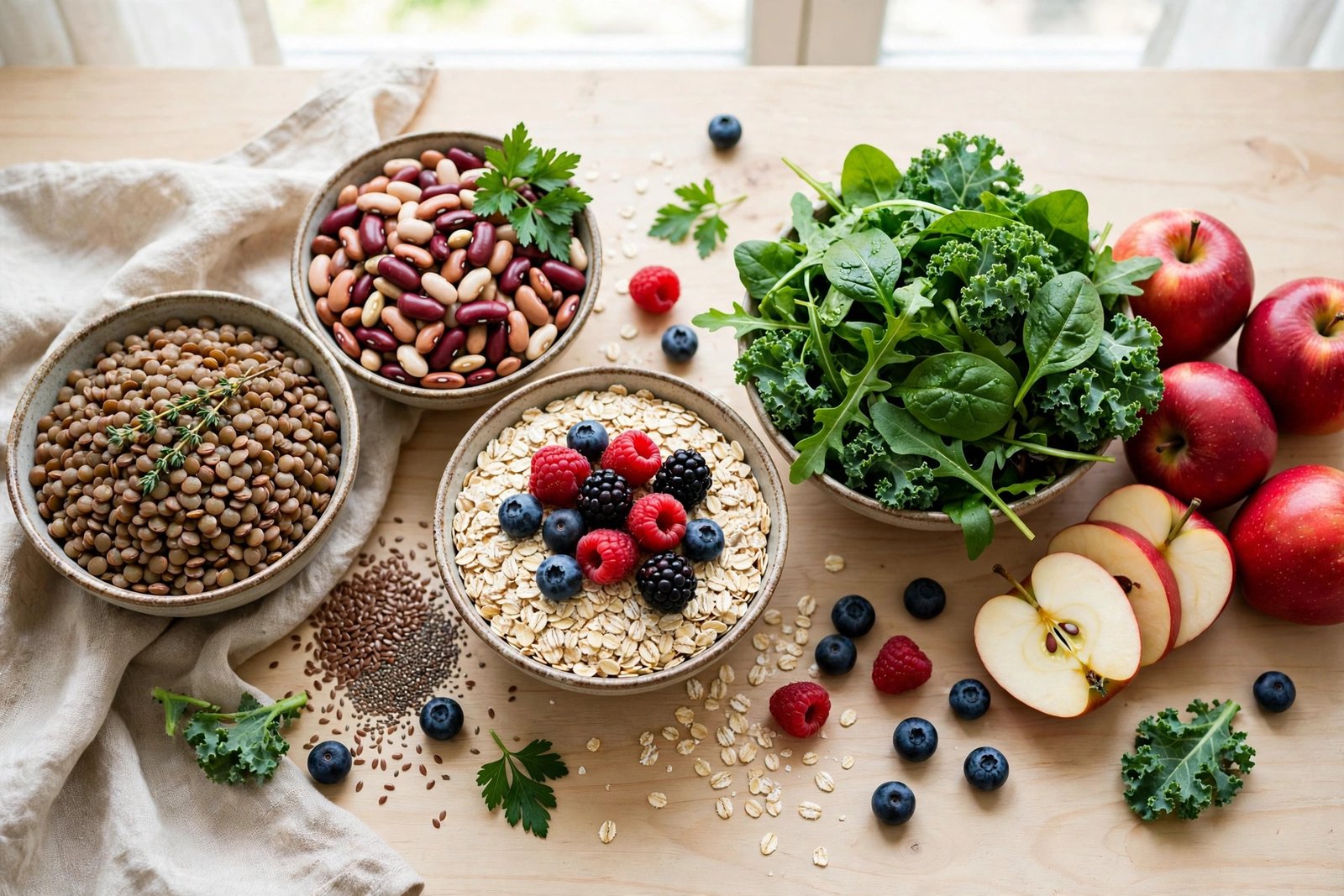
Legumes are the fiber heavyweights. A cup of cooked lentils provides roughly 15 grams of fiber, black beans about 15 grams, and chickpeas around 12 grams — along with plant protein that adds to the fullness effect. Lentils are the easiest starting point because they cook in about 20 minutes with no soaking. Try lentil soup, beans stirred into salads and tacos, or roasted chickpeas as a crunchy snack.
Oats and Other Whole Grains
A bowl of oatmeal made from half a cup of dry oats gives you about 4 grams of fiber, including a soluble type called beta-glucan that is especially good at forming that fullness-promoting gel. Brown rice, quinoa, barley and true whole-wheat bread each add 3–5 grams per serving. The key word is “whole”: refined grains have had most of the fiber stripped out.
Berries, Apples and Pears
Raspberries are the standout fruit at about 8 grams of fiber per cup, with blackberries close behind. A medium pear delivers roughly 5–6 grams and an apple about 4–5 grams — as long as you eat the skin, where much of the fiber lives. Fruit also replaces dessert, which quietly removes calories at the same time as it adds fiber.
Vegetables, Especially the Hearty Ones
Artichokes, Brussels sprouts, broccoli, sweet potatoes and green peas all provide 4–8 grams per cooked cup. A practical approach: make vegetables the largest portion on the plate at lunch and dinner, and start the meal with them or a salad, so you are partially full before the more calorie-dense foods arrive.
Nuts and Seeds
Chia seeds pack about 10 grams of fiber in a single ounce (roughly 2 tablespoons), ground flaxseed about 3 grams per tablespoon, and almonds around 3.5 grams per ounce. They are calorie-dense, so measure portions — a tablespoon of chia stirred into yogurt is a great addition; half a cup poured freely is a meal’s worth of calories disguised as a topping.
Avocado
Half an avocado provides roughly 5–7 grams of fiber along with filling healthy fats. It is genuinely useful for fullness, but again, portion awareness matters: avocado supports weight loss when it replaces less nutritious spreads and toppings, not when it is simply added on top of everything else.
What a High-Fiber Day Can Look Like
- Breakfast: Oatmeal with a cup of raspberries and a tablespoon of ground flaxseed (about 12–13 grams of fiber).
- Lunch: A big salad or grain bowl with a cup of black beans, vegetables and a quarter of an avocado (about 14 grams).
- Snack: A medium pear or apple with a small handful of almonds (about 8 grams).
- Dinner: Lentil soup or a stir-fry with broccoli and brown rice (about 10 grams).
That ordinary day lands around 40 grams of fiber without a single supplement, diet product or exotic ingredient. Pair it with habits that support the same goal — many readers combine a fiber-first plate with a morning cup from our guide to green tea benefits for metabolism — and you have a routine that is sustainable rather than punishing.
How to Add Fiber Without the Gas and Bloating
The most common mistake is going from 15 grams a day to 40 grams overnight. Your gut bacteria need time to adjust to the extra fermentable material, so increase gradually — add roughly one high-fiber food or about 5 grams every few days. Just as important: drink water as you increase fiber. Fiber absorbs water as it moves through your system, and adding fiber without fluid can backfire into the very problem many people are trying to fix — see our guide to natural remedies for constipation relief for the full picture.
If you do get gassy during the transition, do not abandon ship. Our article on natural remedies for gas and bloating covers practical fixes, and in most cases symptoms settle within a week or two as your digestion adapts. Rinsing canned beans well and cooking legumes thoroughly also reduces the compounds that cause gas.
See a Doctor If…
- You have a digestive condition such as Crohn’s disease, ulcerative colitis, diverticulitis or a history of bowel obstruction — fiber advice changes significantly for these conditions.
- You experience persistent bloating, abdominal pain, diarrhea or constipation that does not settle after a few weeks of gradual changes.
- You notice blood in your stool, unexplained weight loss, or a sudden change in bowel habits, especially after age 45.
- You have diabetes or take medication affected by food timing, and plan a major diet change.
- You are considering a fiber supplement and take prescription medicines — some supplements can interfere with how medicines are absorbed.
Medical Disclaimer
Disclaimer: The information in this article is for general educational purposes only and is not medical advice. Home remedies and dietary changes are not a substitute for professional diagnosis or treatment. Weight loss results vary from person to person, and no food or remedy can guarantee them. Talk to your doctor or a registered dietitian before making major changes to your diet, especially if you have a medical condition or take medication.
Frequently Asked Questions
Can fiber alone make me lose weight?
Not on its own. Fiber helps because it makes you fuller on fewer calories, which makes a modest calorie deficit easier to maintain. If total calories stay high, extra fiber will still benefit your digestion and blood sugar, but the scale is unlikely to move.
Which is better for weight loss, soluble or insoluble fiber?
Both are useful, in different ways. Soluble fiber (oats, beans, apples, chia) forms a gel that slows digestion and supports fullness and blood sugar control. Insoluble fiber (vegetable skins, whole wheat, nuts) adds bulk and keeps things moving. A varied diet naturally includes both, so there is no need to overthink the split.
Are fiber supplements as good as high-fiber foods?
Supplements such as psyllium can help if you consistently fall short, and psyllium in particular has decent evidence behind it. But whole foods provide water, protein, vitamins and minerals that a powder cannot. Food first, supplements as a backup — and introduce them gradually with plenty of water.
How long before a high-fiber diet helps with weight?
Most people feel the appetite benefits within days to a couple of weeks — meals satisfy longer and snacking drops. Visible weight change typically takes several weeks of consistent eating and depends on your overall calorie intake and activity.
Can I eat too much fiber?
Yes. Very high intakes, especially when increased suddenly, can cause gas, bloating, cramps and constipation, and extremely high amounts may reduce absorption of some minerals. Build up gradually, drink water, and stay in the recommended range unless a clinician advises otherwise.