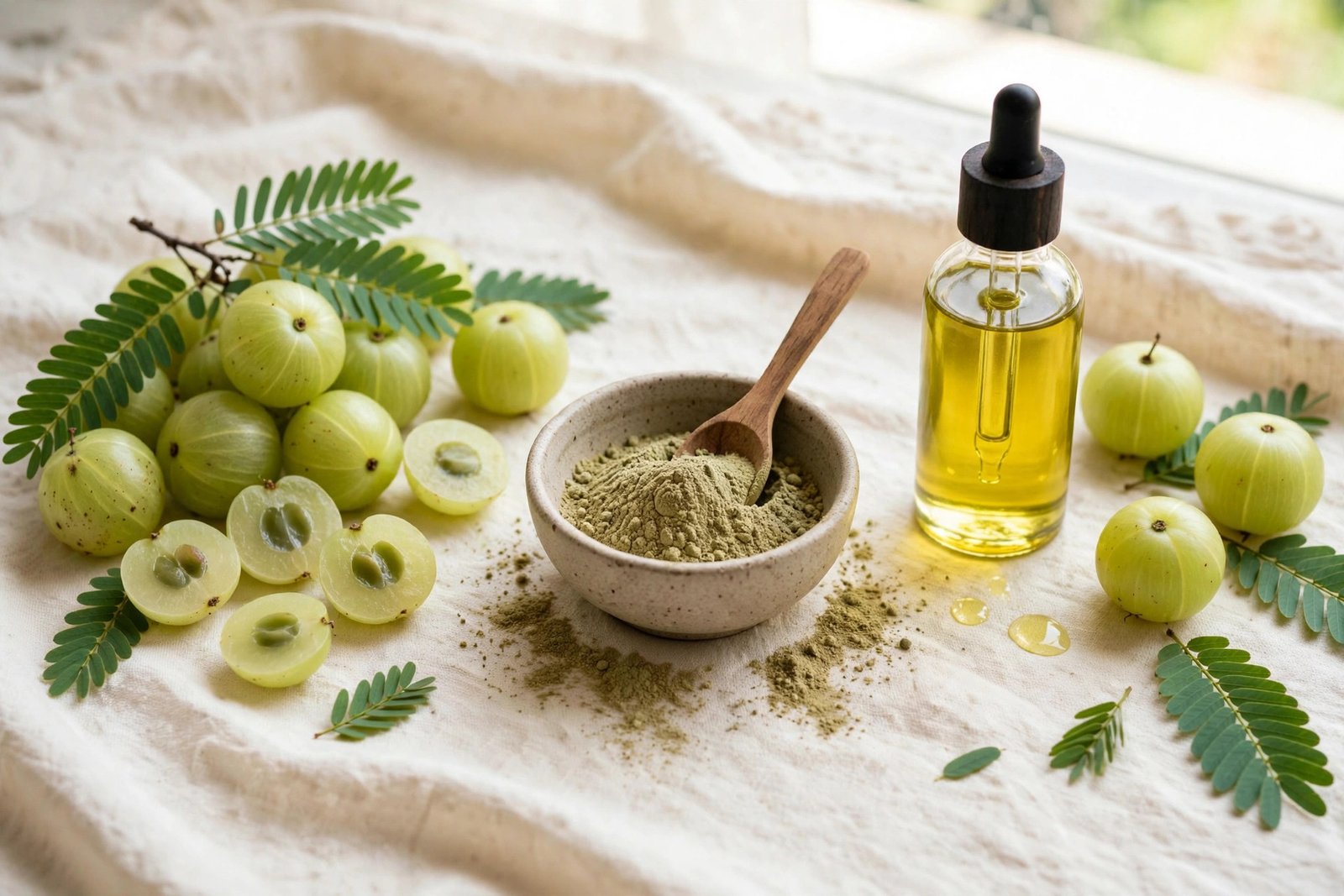
Amla — the Indian gooseberry — might be the most talked-about hair ingredient in traditional beauty care. It is credited with everything from stronger roots to shinier lengths, and one claim towers above the rest: that amla can stop, or even reverse, grey hair. Search online and you will find that promise everywhere. But is it true?
This guide gives amla a fair hearing. We will look at what amla genuinely does well, how to use it in its different forms, and then separate the grey-hair myths from the facts — because honest expectations are what turn a folk remedy into a routine you will actually stick with.
What Is Amla?
Amla (Phyllanthus emblica) is a small, pale green, very sour fruit that grows in India and parts of Asia. It is one of the richest natural sources of vitamin C and is loaded with antioxidants, along with tannins and minerals such as iron and calcium. In Ayurveda it is a core ingredient, and in the US you will find it sold as dried fruit, powder, juice and hair oil in Indian grocery stores, health food shops and online.
What Amla Can Genuinely Do for Hair
- Support hair strength. Amla’s nutrients and antioxidants are linked in traditional use with stronger-feeling hair that breaks less easily. Less breakage means better length retention over months.
- Add shine. Amla powder masks and rinses smooth the hair surface, and smoother hair reflects light better. This is one benefit users notice quickly and consistently.
- Soothe and condition the scalp. Amla has mild antimicrobial and anti-inflammatory properties in lab research, and amla masks are a traditional go-to for a flaky, irritated scalp.
- Work as part of a bigger routine. Amla performs best as one piece of an overall gentle routine like the one in our guide to natural remedies for hair fall and thicker hair — no single ingredient carries the whole job.
The Grey-Hair Question: Myths vs Facts
Myth: Amla reverses grey hair and brings back your natural color
Fact: There is no scientific evidence that amla — or any food or herb — restores pigment to hair that has already turned grey. Greying happens when the follicle’s pigment-producing cells (melanocytes) slow down and eventually stop, a process driven mainly by genetics and age. Amla cannot restart those cells. If a product promises to “reverse greying naturally,” that is marketing, not medicine.
Myth: Amla is a natural hair dye
Fact: Amla on its own is not a dye. However, it is often mixed with henna and indigo in traditional coloring blends, where it helps deepen the tone and adds an ashy, cooler tint that softens henna’s redness. Used alone, amla can very slightly darken light hair over repeated use — enough that blondes should patch test — but it will not cover greys like a dye.
Myth: Eating amla will stop new grey hairs
Fact: Amla is a nutritious fruit, and eating well supports overall hair health. Correcting a genuine nutrient deficiency (such as very low vitamin B12 or iron) can matter for hair, but amla is not especially rich in B12, and no study shows eating amla prevents greying. Enjoy it as food; don’t count on it as a grey-hair shield.
Fact: Antioxidants are good general support
Oxidative stress is one of several factors researchers link to premature greying, and amla is genuinely rich in antioxidants. That makes amla a reasonable part of a healthy lifestyle — it just falls well short of a guarantee, and it cannot undo greys that already exist.
Ways to Use Amla for Hair
Amla Powder Mask
- Mix 3–4 tablespoons of amla powder with warm water into a yogurt-like paste; let it rest 15–20 minutes.
- Apply to the scalp and lengths on damp hair.
- Leave for 30–45 minutes under a shower cap, then rinse thoroughly and condition. Amla paste can feel drying, so follow with conditioner, especially on curly or dry hair.
- Use once a week or every other week.
Amla Oil
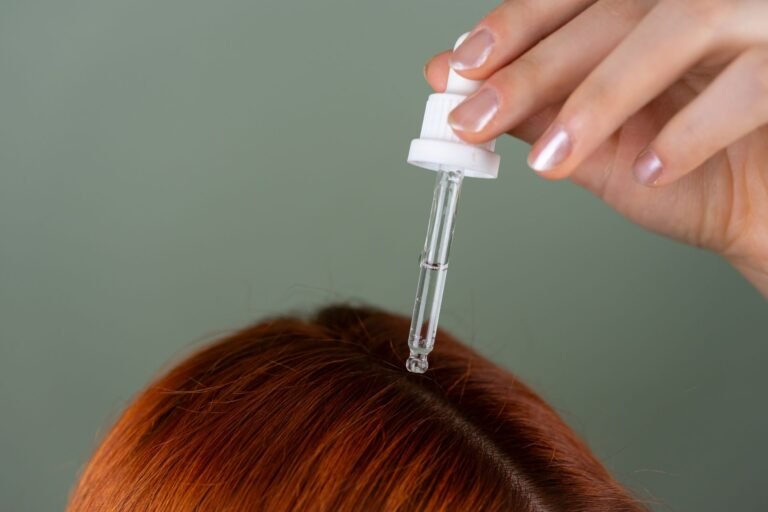
Traditional amla oil is made by infusing amla into coconut or sesame oil. Massage a tablespoon into the scalp before washing, leave at least 30 minutes, then shampoo out. Commercial amla oils vary a lot — check the ingredient list, because some are mostly mineral oil with fragrance and very little actual amla. For a thicker, richer scalp oil, compare with our guide to castor oil for hair growth and thickness.
Amla Rinse
Simmer 2 tablespoons of amla powder (or a handful of dried amla pieces) in 2 cups of water for 10 minutes, cool, strain, and use as a final rinse after shampooing. It adds shine and is the gentlest way to try amla if masks feel like too much work.
Eating Amla
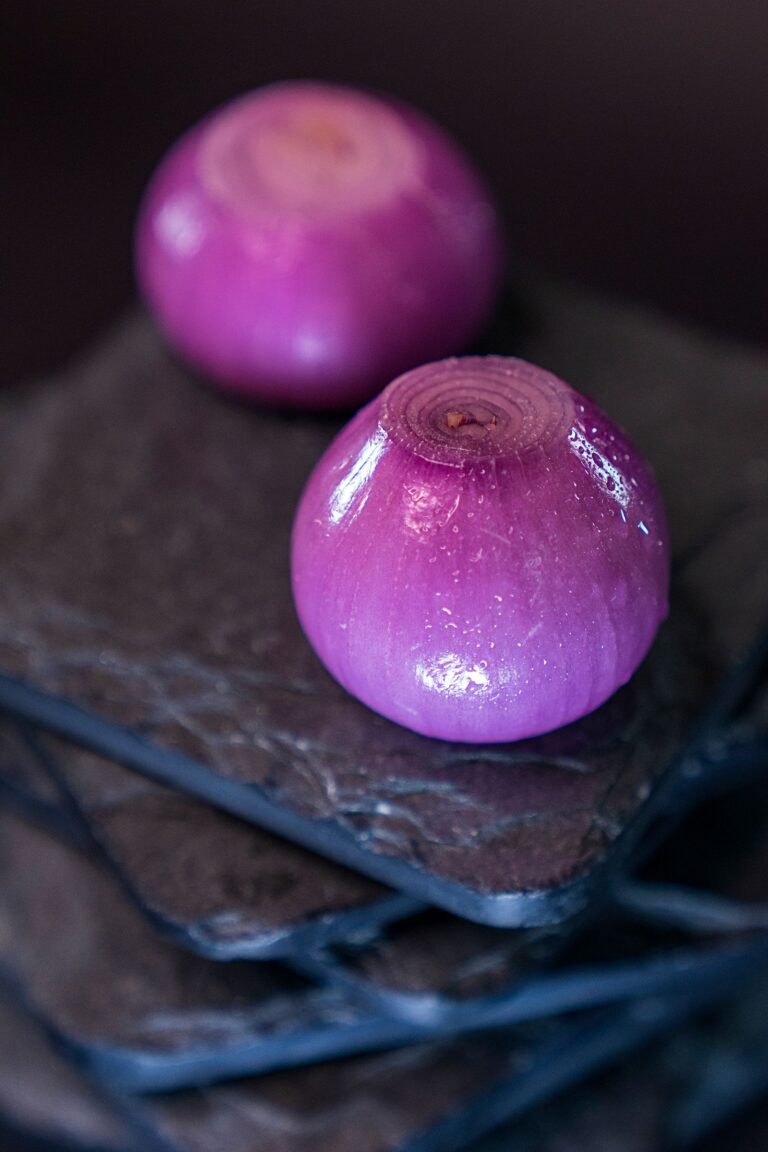
Fresh amla is intensely sour; dried amla, amla juice and amla powder stirred into water or smoothies are easier options. As a food it is a fine source of vitamin C. If you are exploring scalp-based growth traditions, you might also read about onion juice for hair growth, another long-standing home practice.
A Simple Amla Routine That Works
- Weekly: one amla powder mask or an amla oil scalp massage before washing.
- Each wash: gentle shampoo, conditioner on the lengths, and an amla rinse when you want extra shine.
- Daily habits: minimize heat styling, detangle gently from the ends upward, and protect hair from sun and chlorinated water.
- Patience: judge results after 8–12 weeks, not after two washes. Hair changes slowly.
Combining Amla With Other Traditional Ingredients
Amla is rarely used alone in traditional routines — it is the anchor of a famous trio. Combined with shikakai (a gentle natural cleanser) and reetha (soapnut, a mild natural surfactant), amla forms a complete wash-and-condition routine that predates bottled shampoo. Shikakai and reetha powders are sold in the same Indian grocery stores that stock amla powder across the US.
A few combinations worth knowing:
- Amla + yogurt: Softens the astringent edge of amla powder and suits dry hair better.
- Amla + henna + indigo: The traditional plant-based approach to coloring grey hair brown-black tones, with amla cooling henna’s red. This is a real dye process — allow a few hours and expect permanent color, unlike amla alone.
- Amla + coconut oil: The classic infused oil; gentle, moisturizing and the easiest entry point for beginners.
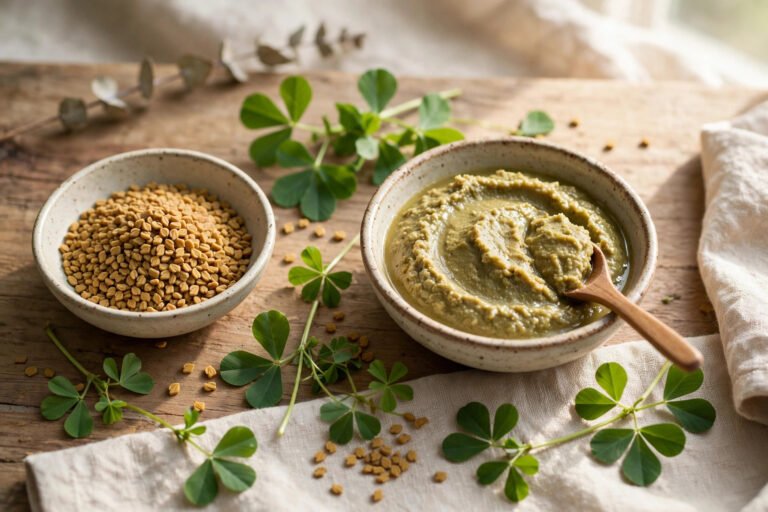
- Amla + fenugreek: A mask pairing for hair that is both dull and breaking, combining amla’s shine with fenugreek’s conditioning slip.
Introduce one combination at a time and give it a few weeks, so you can tell what is actually helping your hair.
Who Should Be Careful
- Light or blonde hair: Repeated amla use can slightly deepen hair color. If keeping your exact shade matters, strand-test first.
- Dry hair types: Amla powder can feel astringent and drying. Mix it with yogurt or aloe vera gel, or choose the oil form instead.
- Allergies and sensitivity: Patch test any new amla product — natural does not mean reaction-proof.
- Amla juice and supplements: Amla may affect blood sugar and can interact with blood-thinning medication. If you take regular medication or manage diabetes, talk to your doctor before drinking amla juice daily or taking supplements.
- Product quality: Buy powders from reputable brands; cheap powders are sometimes bulked out with fillers or contain henna without saying so.
See a Doctor If…
- Greying starts very young (before your 20s) or suddenly — occasionally it is linked with thyroid problems or vitamin deficiencies worth checking.
- You have patchy hair loss, scalp sores, scaling or pain.
- Shedding is heavy, sudden, or continues beyond a few months despite gentle care.
Medical Disclaimer
Disclaimer: The information in this article is for general educational purposes only and is not medical advice. Home remedies are not a substitute for professional diagnosis or treatment, and natural ingredients can still cause allergies or interact with medicines. Talk to your doctor or a dermatologist about ongoing hair loss, scalp problems or early greying.
Frequently Asked Questions
Does amla really stop grey hair?
No reliable evidence shows amla stops or reverses greying. Greying is mainly genetic: the follicle gradually stops producing pigment. Amla’s antioxidants support general hair and scalp health, which is worthwhile, but it cannot restart pigment production in a grey follicle.
Which is better for hair: amla powder or amla oil?
They do different jobs. Powder masks are better for scalp care, strength and shine in one treatment, but can feel drying. Oil is more moisturizing and better for dry hair and scalp massage. Many people alternate them — a mask one week, an oil treatment the next.
How long does amla take to show results?
Shine and smoothness can improve after the first one or two uses. Anything related to strength and reduced breakage needs consistent use over at least 8–12 weeks, because you are judging it by the condition of hair that grows and is retained over time.
Can amla darken my hair?
Slightly, with repeated use — especially in traditional blends with henna and indigo. Plain amla alone is not a dye and will not cover grey hair, but on very light hair it can add a subtle ashier tone. Strand-test first if your color matters to you.
Is it safe to eat amla every day?
For most healthy adults, amla as a food — a piece of fruit, a small glass of diluted juice, or powder in a smoothie — is fine. Daily concentrated juice or supplements are a different matter if you take blood thinners or diabetes medication, since amla can influence blood sugar and clotting. Check with your doctor in that case.