
Natural Remedies for Hair Fall and Thicker Hair
Natural Remedies for Hair Fall are often the first thing people look for when they notice more hair on the pillow, in the shower drain, or on the hairbrush than usual. Seeing hair fall can be worrying, especially when it seems to happen suddenly or when the hair starts to look thinner around the parting or the temples. Hair fall is common, and it has many possible causes, from stress and illness to changes in diet, hormones, hair care habits and the natural growth cycle of the hair itself. This article offers a calm, practical look at gentle, natural approaches that may support the scalp and hair over time, without promising a cure or a quick transformation. It is written as general educational information, not as medical advice.
Healthy hair grows from a healthy scalp, and that simple idea sits at the centre of most natural hair care. The scalp is skin, and it needs the same kind of gentle attention as the skin on the face or body: regular cleansing, protection from harsh products, enough moisture, and care that does not pull, scratch or irritate it. Hair itself is made of a protein called keratin, and each strand grows, rests and sheds in a cycle that lasts for years. Losing some hair every day is a normal part of that cycle, and the strands that fall out are usually replaced by new growth. Problems tend to arise when shedding increases for a long period, when new growth slows, or when the scalp becomes dry, itchy, inflamed or clogged, making it harder for hair to grow well.
This guide covers the basics of hair fall, gentle scalp care, oiling and massage, washing habits, nutrition and daily routines, and the common mistakes that can make shedding worse. It also explains when professional advice is needed, because some types of hair loss have medical causes that home care cannot address on its own. Readers who want a related skin care topic may find Natural Remedies for Acne and Clear Skin useful for understanding how gentle care differs by skin type, and the coconut oil guide at Coconut Oil Benefits for Dry Skin and Eczema Relief may also be relevant, because coconut oil is sometimes used on the scalp as well as on dry skin. The aim throughout is steady, realistic care that supports the hair and scalp over weeks and months.
Understanding Hair Fall and Thinning Hair
Hair grows in a cycle with three main stages: a growth stage that can last for several years, a short transition stage, and a resting stage that ends with the hair shedding naturally. At any time, most hairs are in the growth stage, while a smaller number are resting and ready to fall out. Shedding of around fifty to one hundred hairs a day is often described as normal, although the exact number varies from person to person and is hard to count in daily life. What matters more than a precise number is whether shedding has changed noticeably, whether the hair looks thinner, or whether the scalp is becoming more visible in places where it was not before.
Hair fall can be triggered by many factors, and more than one may be involved at the same time. Short-term increases in shedding often follow stress, illness, surgery, a fever, a major life change, or a sudden change in diet. This type of shedding usually appears a few months after the trigger and often settles as the body recovers, although the hair may take time to look full again. Longer-term thinning can be linked to family history, hormonal changes, thyroid conditions, low iron, low vitamin D, certain medications, or scalp conditions such as dandruff or seborrhoeic dermatitis. Tight hairstyles, frequent heat styling, chemical treatments and rough brushing can also damage the hair shaft and make breakage look like hair fall, even when the roots are healthy.
Natural Remedies for Hair Fall and Scalp Health
Natural Remedies for Hair Fall usually start with the scalp, because a calm, clean scalp gives hair a better place to grow. A healthy scalp should feel comfortable, not tight, itchy or sore, and it should not have thick flakes, red patches or tender spots. Gentle care means washing regularly enough to remove sweat, oil and product build-up, without scrubbing harshly or using very hot water. Lukewarm water, a mild shampoo suited to the hair type, and fingertips rather than nails for massaging the scalp are simple habits that help. The scalp should be rinsed well, because shampoo left behind can irritate the skin and leave the hair looking dull.
Natural ingredients are often chosen for scalp care because they are simple and familiar. Aloe vera gel is one example, and it is valued for its light, soothing texture on the scalp, while coconut oil is sometimes used as a pre-wash treatment for dry hair and scalp. Readers who want more on aloe vera can look at Aloe Vera Benefits for Skin Healing and Hydration for background on how this plant is used on the skin, although scalp care needs its own approach and the gel should be rinsed out well. Whatever is used on the scalp, a patch test is sensible, and only one new product or ingredient should be tried at a time, so that any irritation can be traced to its cause. If the scalp becomes red, itchy, painful or flaky after a new product, that product should be stopped.
Natural Remedies for Hair Fall: Gentle Oiling and Massage
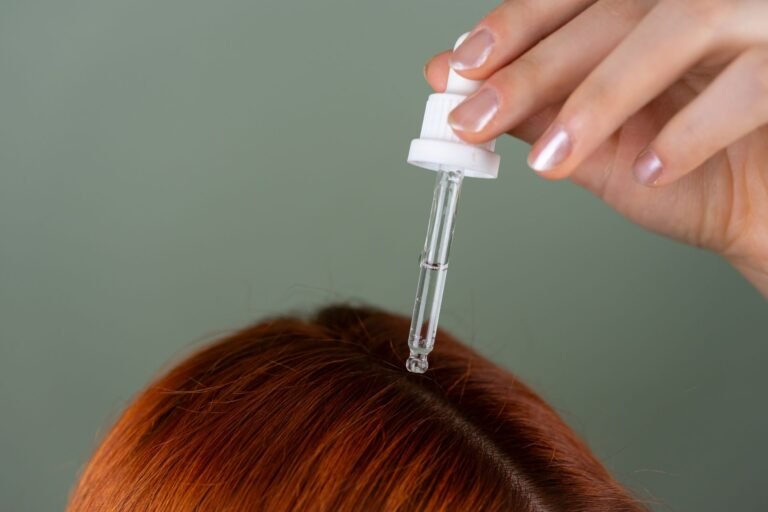
Natural Remedies for Hair Fall often include oiling, a practice that has been part of hair care in many cultures for a long time. A small amount of oil, such as coconut oil, almond oil or olive oil, can be warmed between the palms and smoothed through the lengths of the hair, with a light application on the scalp. The oil may help the hair feel softer and less prone to breakage, and it can reduce the dry, rough feeling that makes hair harder to comb. For people with a dry scalp, a thin layer of oil may also feel soothing, although it should not be left on a scalp that is already oily, flaky or irritated without care, because it can trap build-up against the skin.
Scalp massage is a gentle companion to oiling, and it can be done with or without oil. Using the fingertips, not the nails, small slow circles can be made across the scalp for a few minutes, moving from the front to the back and from the sides towards the crown. This feels relaxing for many people, and it can help distribute natural oils and ease tension in the scalp and neck. It should never be rough or painful, and it should be stopped if it causes discomfort. A short massage once or twice a week, before washing the hair, is enough for most people, and the hair should be washed well afterwards so that oil does not remain on the scalp for days.
Natural Remedies for Hair Fall and Hair Washing Habits
Natural Remedies for Hair Fall also depend on how the hair is washed, because washing too often or too harshly can damage the hair and irritate the scalp. Most people do not need to wash their hair every day, although those with a very oily scalp, those who exercise daily, or those who live in a hot, humid climate may prefer to wash more often. Others may find that washing two or three times a week keeps the hair and scalp balanced. The right frequency is the one that leaves the scalp comfortable and the hair clean without feeling stripped or dry, and it may change with the seasons and with activity levels.
When washing, lukewarm water is kinder than very hot water, and a small amount of mild shampoo is usually enough. The shampoo should be massaged gently into the scalp with the fingertips, while the lengths of the hair can be cleaned by the lather running down them, rather than by piling the hair on top of the head and scrubbing it. Conditioner is best applied to the mid-lengths and ends, where the hair is oldest and driest, rather than directly on the scalp, where it can leave a heavy residue. After washing, the hair should be patted gently with a soft towel or an old cotton T-shirt, rather than rubbed hard, because wet hair is more fragile and more likely to break.
Nutrition and Daily Habits for Thicker Hair
Hair is made mainly of protein, so a diet that includes enough protein is an important foundation for hair health. Good sources include eggs, fish, lentils, beans, yoghurt, cheese, nuts and seeds, and most people in the United States and the United Kingdom can meet their needs through a varied diet without special supplements. Iron, zinc, vitamin D and B vitamins also play a part in the hair growth cycle, and a lack of any of them can contribute to shedding in some people. Rather than taking high-dose supplements without advice, it is usually better to focus on a balanced diet first, and to ask a doctor for blood tests if a deficiency is suspected, because supplements can have side effects and can interact with medication.
Daily habits outside the kitchen matter too. Sleep, stress and general health all affect the hair, because the body tends to prioritise essential functions when it is under strain, and hair growth can slow as a result. Regular sleep, gentle exercise such as walking, and calm ways of managing stress may support the hair indirectly, along with general wellbeing. Smoking is linked to poorer hair and skin health, and reducing or stopping it can help the whole body. Drinking enough water and eating a varied diet with fruit, vegetables and healthy fats are simple habits that support the scalp and hair over time, even though their effects appear gradually rather than overnight.
Natural Remedies for Hair Fall: Aloe Vera and Scalp Care
Natural Remedies for Hair Fall sometimes include aloe vera, a plant gel that is widely used on the skin and scalp for its light, cooling feel. Fresh aloe vera gel, or a plain gel with a short ingredient list, can be applied to the scalp in a thin layer and left for a short time before washing, where it may help the scalp feel calm and hydrated. Some people find it useful for a dry, itchy scalp, while others use it as a light leave-in on the hair lengths. It should be rinsed out well, and it should not be used on broken, infected or very inflamed skin without medical advice. More background is available at Aloe Vera Benefits for Skin Healing and Hydration, which explains how aloe vera is used for skin care in general terms.
Coconut oil is another natural option that some people use on the scalp and hair, and its use for dry skin is described in Coconut Oil Benefits for Dry Skin and Eczema Relief. On the hair, a small amount can be used as a pre-wash treatment, applied to the lengths and ends and left for thirty minutes to a few hours before shampooing. This may help dry hair feel softer and less likely to snap during combing. It is important to use only a small amount on the scalp, to wash it out thoroughly, and to stop if it makes the scalp feel itchy, heavy or clogged. People with an oily scalp or with acne along the hairline should be especially careful, because oil left on the skin can block pores for some people.
Common Mistakes to Avoid for Hair Fall
One common mistake is brushing or combing the hair too roughly, especially when it is wet. Wet hair stretches more easily and breaks more readily, so a wide-toothed comb used gently from the ends upwards is kinder than a fine brush pulled through tangled hair. Tying the hair very tightly, wearing heavy extensions, or keeping the same tight style every day can also pull on the roots and damage the hairline over time. Looser styles, soft hair ties, and giving the hair a rest from tight ponytails and braids can help reduce this kind of strain, particularly for people who already notice thinning around the temples.
Heat and chemical treatments are another source of damage that is often underestimated. Frequent use of straighteners, curling irons and very hot hairdryers can dry out the hair shaft and make it brittle, while repeated colouring, bleaching, perming or relaxing can weaken it further. Using the lowest effective heat setting, keeping the dryer at a distance, applying a heat protectant, and allowing longer gaps between chemical treatments can all reduce damage. It is also a mistake to try many new oils, masks and treatments at once, because that makes it impossible to know what is helping and what is causing irritation. Introducing one change at a time, with a patch test and a few weeks of observation, is a slower but more reliable way to care for the hair.
When to See a Doctor or Dermatologist
Some hair fall needs medical attention, and it is important to recognise when home care is not enough. A doctor or dermatologist should be consulted if hair is falling out in patches, if the scalp is painful, red, scaly or blistered, if there are bald spots, or if shedding is sudden, severe or continues for many months without improving. It is also worth seeking advice if hair fall is accompanied by other symptoms, such as extreme tiredness, weight changes, changes in periods, or a very dry or very oily scalp that does not settle with gentle care. These signs can sometimes point to a thyroid condition, low iron, a scalp condition, or another health issue that needs proper testing.
A dermatologist can examine the scalp and hair, ask about diet, medication, stress and family history, and arrange blood tests or a scalp examination if needed. They can also explain which treatments are supported by evidence for the type of hair loss involved, and which products are unlikely to help. Readers can find reliable general information from organisations such as the American Academy of Dermatology and the NHS, which provide clear guidance on hair loss and scalp care, although these sources do not replace a personal consultation. If a reader is unsure whether their hair fall needs medical attention, asking a doctor or pharmacist is usually better than waiting and hoping it resolves on its own.
Building a Simple Routine for Thicker Hair
Natural Remedies for Hair Fall work best as part of a simple routine that can be followed week after week, rather than as a short burst of intense treatment. A practical routine might include washing with lukewarm water and a mild shampoo two or three times a week, conditioning the lengths and ends, combing gently with a wide-toothed comb, and a short scalp massage or a light oiling session once a week before washing. Loose hairstyles, protection from excessive heat, and a balanced diet can support the same goal from different directions. Keeping the routine simple makes it more likely to be kept up, and a routine that is followed steadily is more useful than a complicated one that is abandoned after a few days.
Patience is an essential part of hair care, because hair grows slowly, usually by about a centimetre a month, and changes in shedding or thickness take months to become visible. Taking a simple note of how the hair feels, how much is shedding, and what has changed in the routine can help a person see gradual progress that might otherwise be missed. Photographs taken in the same light, once a month, can also help, although they should be viewed with realistic expectations. If the hair does not improve, or if it gets worse despite gentle care, that is useful information to share with a doctor. With steady care, realistic expectations and professional advice when needed, natural remedies can be a helpful part of supporting thicker, stronger and healthier looking hair over time.
Disclaimer: This article is for educational information only and is not medical advice. Natural remedies may help support scalp and hair health for some people, but they are not a cure for hair loss, and results vary from person to person. If you have patchy hair loss, a painful or inflamed scalp, severe shedding, or another health condition, please speak to a healthcare professional or dermatologist before starting a new treatment, especially during pregnancy, while breastfeeding, or when taking medication. Stop using a new product and seek medical advice if you notice increased redness, itching, swelling, pain, or any sign of infection or allergy.
3 Comments