It happens fast: a few hours at the beach, a ball game, yard work on a bright afternoon in July — and by evening your shoulders are red, hot and sore to the touch. A sunburn is exactly what it sounds like: a burn, caused by ultraviolet (UV) radiation damaging the skin. The good news is that mild sunburns respond well to simple home care. The honest news is that no remedy can undo the damage itself; what you can do is cool the skin, ease the pain and support healing while your body does the repair work over the following days.
This guide covers the natural relief steps that genuinely help — cool water, aloe vera, the right kind of moisturizer at the right time, and hydration — plus the popular “remedies” that make burns worse, and the warning signs that a sunburn needs medical care instead.
Step 1: Cool the Skin Down
As soon as you realize you are burned, get out of the sun and start cooling the skin. A cool (not cold) shower or bath for 10–15 minutes brings the surface temperature down and eases that hot, tight feeling. No tub? Cool compresses work just as well: soak a soft cloth in cool water, wring it out, and lay it over the burned area for 10–15 minutes at a time, re-wetting as it warms up. Repeat several times a day for the first day or two.
Skip ice and ice water — extreme cold can damage already injured skin further. And keep showers gentle afterwards: lukewarm water, mild cleanser only where you really need it, and pat dry instead of rubbing with the towel.
Step 2: Aloe Vera, the Classic Sunburn Soother
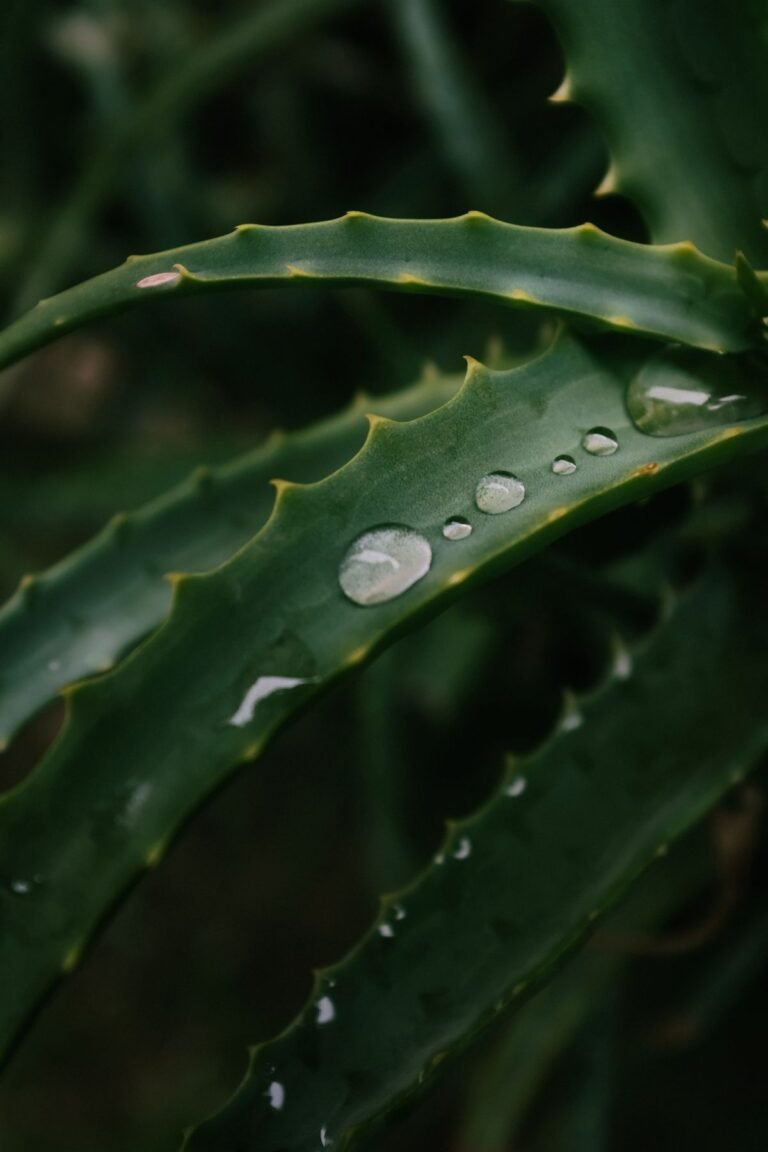
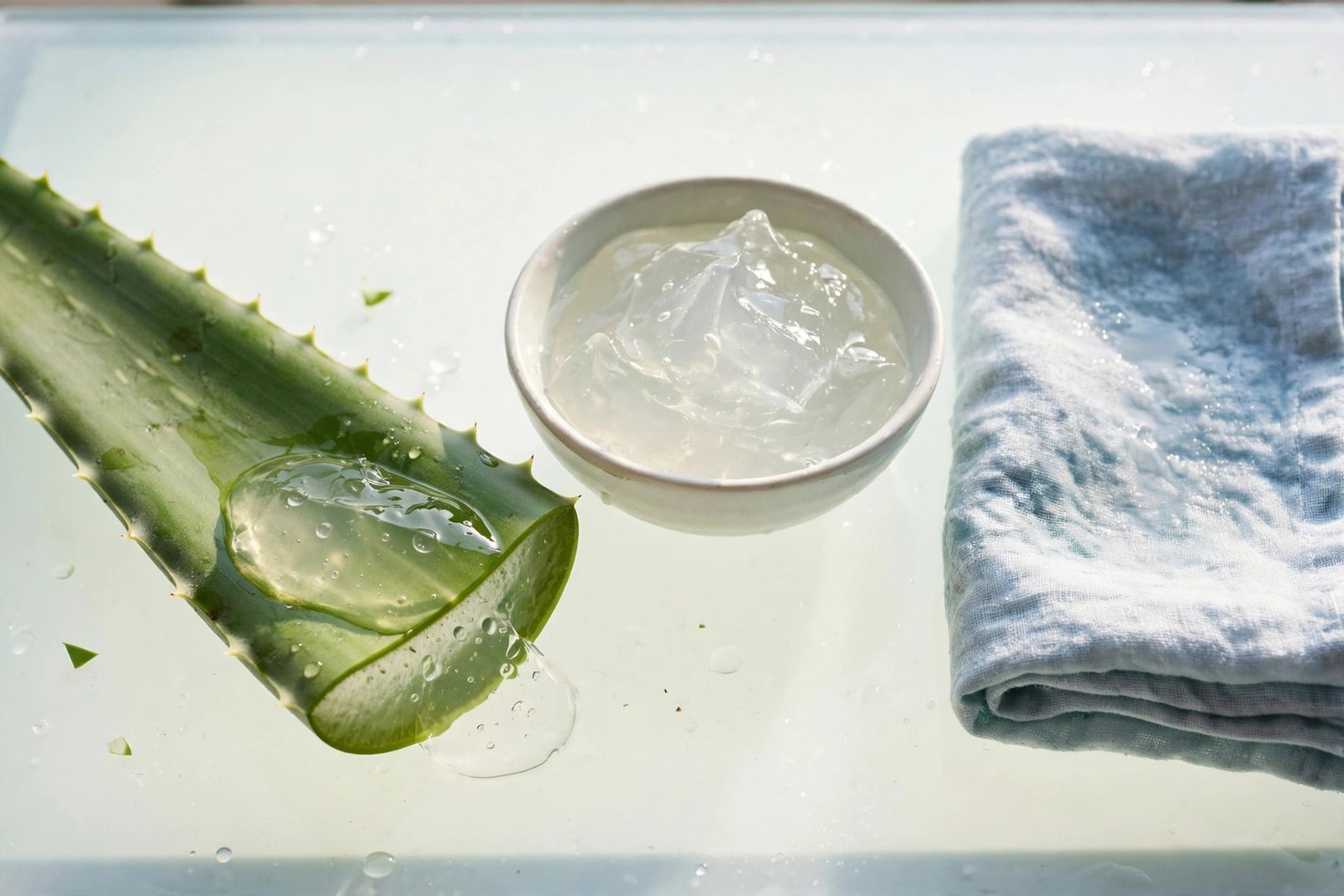
Aloe vera gel is the remedy most associated with sunburn, and for good reason: it feels cooling on contact, helps the skin hold moisture, and contains compounds that laboratory research links to calmer, more comfortable healing skin. Our full guide to aloe vera benefits for skin healing and hydration goes deeper into how it works.
How to use it well:
- Timing: Apply after cooling the skin, while it is still slightly damp, so the gel helps seal in moisture.
- Fresh plant vs. store-bought: Gel straight from a leaf works. Store-bought gels are fine too — choose one that lists aloe as the first ingredient and avoid versions loaded with alcohol, fragrance or added lidocaine unless a pharmacist suggests one, since alcohol-based gels can sting and dry the skin.
- Reapply: A thin layer 2–3 times a day, or whenever the skin feels hot and dry again. Chilling the gel in the refrigerator makes it feel even better.
- Patch awareness: Aloe allergy is uncommon but possible. If a new rash or itching appears where you applied it, stop and rinse.
Step 3: Moisturize — at the Right Time, With the Right Product
Sunburned skin loses water fast, and gentle moisturizing helps it heal more comfortably. The sequencing matters, though. While the skin is still hot and the burn is fresh (the first day or so), use light, water-based products like aloe or a fragrance-free lotion. Heavy oils and buttery ointments trap heat against fresh burns and can feel worse.
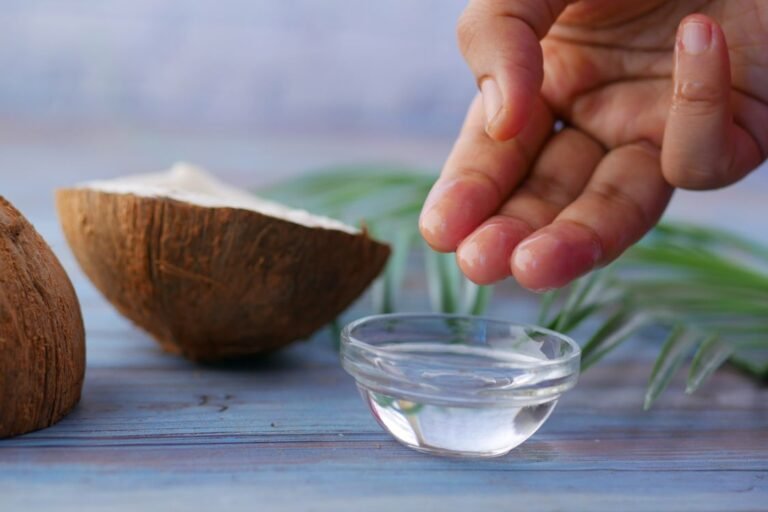
Once the heat has settled and the skin is in its dry, tight, starting-to-heal phase, a richer moisturizer — or a light layer of coconut oil — becomes useful; our article on coconut oil benefits for dry skin explains where oils shine and where they do not. Throughout healing, avoid products with fragrance, retinol, exfoliating acids or benzocaine/lidocaine “burn sprays” that can irritate or trigger contact allergies on damaged skin.
Step 4: Hydrate From the Inside
A sunburn pulls fluid toward the skin’s surface, which is why a bad burn can leave you feeling tired and dehydrated. Drink extra water steadily for the first 24–48 hours — more than your usual amount — and go easy on alcohol, which dehydrates you further. If you feel dizzy, develop a bad headache or stop urinating normally, those are dehydration warning signs (see the doctor section below).
Extra Comfort Measures for the First Two Days
While the burn is at its sorest, a few small things make a real difference. Loose, soft, natural-fiber clothing rubs less than synthetics, and sleeping with a light cotton sheet rather than a heavy blanket helps. If the burn throbs when you lie down, an over-the-counter pain reliever taken exactly as directed on the label is a reasonable option for healthy adults — it is not “natural,” but sunburn is a genuine burn, and comfort helps you rest and heal. Keep the bedroom cool, since warm rooms make hot skin feel worse, and resist the urge to test the burn with your hand every hour; handling irritates it. If your face is burned, skip makeup and shaving for a day or two, and if your lips are burned, a plain, fragrance-free lip balm with SPF protects them while they recover.
What NOT to Do to a Sunburn
- No butter, oils or greasy ointments on a fresh burn. The old butter remedy traps heat and can introduce bacteria. Oils belong later, once the skin has cooled.
- Do not pop blisters. Blisters are your body’s sterile dressing. If one breaks on its own, gently clean the area and cover it loosely.
- Do not peel or exfoliate. When peeling starts, let skin shed on its own schedule. Picking invites infection and scarring, and scrubbing is worse.
- Do not go back into the sun “to even it out.” Burned skin needs cover, not more UV. Loose, tightly woven clothing and shade until it heals.
- Skip home “peels” and vinegar soaks. Acidic kitchen experiments on burned skin sting, irritate and help nothing.
What Healing Looks Like (So You Don’t Worry Unnecessarily)
A typical mild sunburn reddens within a few hours, feels worst on days 1–2, and starts settling by day 3. Peeling often begins around days 3–7 as damaged surface cells shed; the new skin underneath is pink, sensitive and sun-vulnerable for a while. Keep moisturizing gently through the peel, and be extra careful with sun protection on the fresh skin. One longer-term note: repeated sunburns are linked with premature skin aging and uneven tone — if dark patches are a concern for you, our guide to natural remedies for dark spots and uneven skin tone covers gentle options and realistic expectations.
Preventing the Next One
- Sunscreen, applied properly: Broad-spectrum SPF 30 or higher, about a shot-glass amount (roughly 2 tablespoons) for the whole body, applied 15–30 minutes before going out.
- Reapply every 2 hours, and sooner after swimming or heavy sweating — “water resistant” does not mean waterproof.
- Check the UV index in your weather app; midday (10 a.m.–4 p.m.) is peak burn time in most of the US.
- Shade and clothing: A wide-brim hat, sunglasses and UPF clothing protect better than sunscreen alone, especially for kids.
- Remember the sneaky exposures: Cloudy days, car windows, and spring sun after a pale winter burn people constantly.
See a Doctor If…
- Blistering covers a large area, or the burn is on the face, hands, feet or genitals.
- You have fever over about 101°F, chills, nausea, headache, confusion or dizziness — possible sun poisoning or dehydration, which needs prompt care.
- There are signs of infection: increasing pain after the first days, swelling, red streaks, pus or warmth spreading.
- The burn is on a baby under 1 year old, or a young child has a large or blistering burn.
- Pain is severe or does not start improving within a couple of days, or you take medication that increases sun sensitivity and burn unusually fast.
Medical Disclaimer
Disclaimer: This article is for general educational purposes only and is not medical advice. The remedies described are home care measures for mild sunburn; they do not treat serious burns or prevent skin cancer. Severe sunburn, sun poisoning symptoms or signs of infection need prompt medical attention.
Frequently Asked Questions
How long does a sunburn take to heal?
A mild sunburn usually feels better within 3 days and finishes peeling within about a week. Moderate burns with small blisters can take closer to two weeks. If pain is still worsening after day 2, or the skin looks infected, get it checked rather than waiting it out.
Is aloe vera or coconut oil better for sunburn?
They belong to different stages. Aloe vera gel is the better choice while the burn is fresh and hot, because it cools and hydrates without sealing in heat. Coconut oil and richer moisturizers become useful later, once the skin is cool, dry and healing. Using oil too early is one of the most common sunburn mistakes.
Does a sunburn turn into a tan?
Sometimes the skin darkens after the redness fades, but that is not a healthy process — redness means the skin was injured, and any tan that follows is your skin defending itself against damage already done. It is far better to prevent the burn than to hope it converts.
Can I shower with a sunburn?
Yes — cool or lukewarm showers are actually part of the treatment. Keep them short, skip harsh scrubbing and strong fragranced products on the burned area, pat dry gently, and moisturize right after. Avoid hot water, which increases blood flow to the burn and makes it throb.
When should a child with sunburn see a doctor?
Any sunburn in a baby under 1 year old should be discussed with your pediatrician promptly. For older children, seek care for blistering over a large area, fever, unusual sleepiness, signs of dehydration (few wet diapers, no tears, very low urine output), or severe pain.