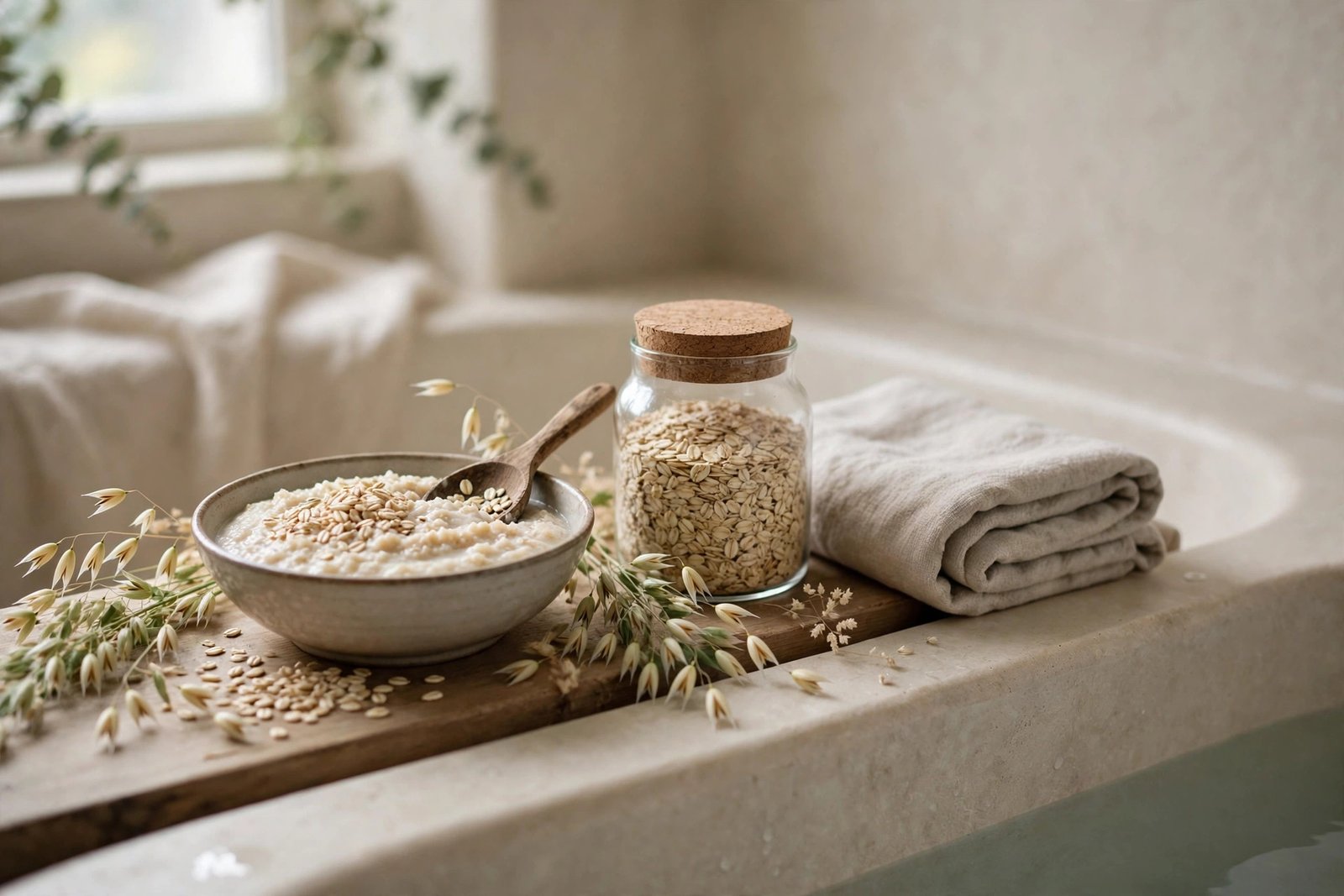
When skin is dry, itchy and irritated, some of the most expensive creams in the store share an ingredient with your breakfast: oatmeal. Oats have been used on skin since ancient times, and this is one home remedy with unusually solid credentials — colloidal oatmeal (oats ground to an ultrafine powder) is recognized in the US as an over-the-counter skin protectant, and you will find it in pharmacy-brand bath soaks, lotions and eczema creams across the country.
This guide explains why oatmeal calms itchy skin, how to make a proper oatmeal bath at home, how to use oatmeal as a paste or face mask for smaller areas, and the situations where plain oatmeal is not enough and a doctor should take a look.
Why Oatmeal Soothes Itchy, Dry Skin
Anti-Itch Compounds Called Avenanthramides
Oats contain a group of antioxidants called avenanthramides that are found almost nowhere else in nature. In laboratory and clinical research, these compounds help calm the skin’s irritation response — the redness, warmth and itch signals that make dry or eczema-prone skin so uncomfortable. This is the main reason oatmeal outperforms most kitchen ingredients when it comes to itch.
It Supports the Skin Barrier
Dry, itchy skin is usually a barrier problem: the outer layer loses water too quickly and lets irritants in. Oatmeal contains starches and beta-glucan that form a light, protective film on the skin and help it hold moisture. That is also why so many dermatologist-recommended moisturizers pair oatmeal with other barrier ingredients — and why it combines well with gentle oils, as our guide to coconut oil benefits for dry skin and eczema relief explains.
It Gently Normalizes Skin pH
Healthy skin is slightly acidic, and itchy, irritated skin often drifts toward alkaline — partly thanks to harsh soaps. An oatmeal soak helps bring the surface back toward its normal range, which can reduce itching and make the skin less reactive.
Colloidal Oatmeal vs. Kitchen Oats: What Is the Difference?
Colloidal oatmeal is whole oats ground into an extremely fine, even powder that disperses through bathwater instead of sinking or floating in clumps. You can buy it ready-made (pharmacy bath-soak packets are inexpensive), or make a home version: put plain, unflavored rolled oats or steel-cut oats in a blender or food processor and grind until the powder feels silky and a spoonful stirred into a glass of warm water turns it milky and smooth. Breakfast instant oatmeal packets are not ideal — many contain sugar, flavorings and salt that irritated skin does not need.
How to Take an Oatmeal Bath
- Step 1: Fill the tub with lukewarm water — not hot. Hot water feels good in the moment but strips oils and reliably makes itching worse afterwards.
- Step 2: As the tub fills, sprinkle in about 1 cup of colloidal oatmeal (one standard bath packet, or your homemade powder), swirling it with your hand so it disperses evenly. The water should look milky.
- Step 3: Soak for 10–15 minutes. Gently ladle the oat water over shoulders, arms and any itchy areas above the waterline.
- Step 4: Get out carefully — oatmeal makes the tub slippery. Pat (do not rub) your skin dry with a soft towel, leaving it slightly damp.
- Step 5: Within a few minutes, apply a fragrance-free moisturizer or a gentle oil to lock in the water. This “soak and seal” step is where most of the lasting benefit comes from.
An oatmeal bath once a day during a dry-skin or itchy flare is a reasonable routine for most people; when skin calms down, two or three times a week is plenty for maintenance.
Oatmeal Paste and Face Masks for Small Areas
A Simple Spot Paste
For a small itchy patch — a dry elbow, an irritated area on the hands — mix 2 tablespoons of finely ground oatmeal with just enough warm water to form a spreadable paste. Apply it to the area, leave for 10–15 minutes, rinse with lukewarm water and moisturize. It is an easy way to get oatmeal’s calming effect without running a full bath.
A Gentle Oatmeal Face Mask
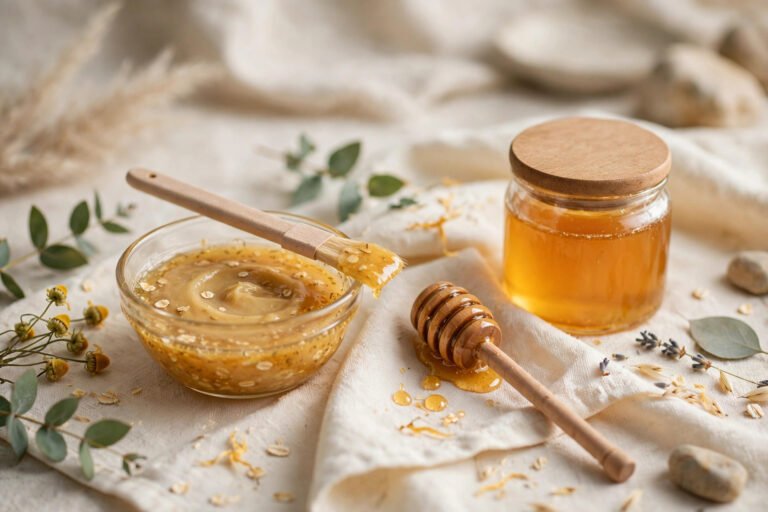
For dry, reactive facial skin, combine 2 tablespoons of ground oatmeal with 1 tablespoon of plain yogurt or a little warm water, and optionally a teaspoon of honey. Spread over clean skin, leave for 10 minutes, and rinse. Keep expectations realistic: this mask soothes and lightly softens; it is not a treatment for acne or eczema on the face. If your interest is brightening masks instead, our article on the turmeric face mask benefits for glowing skin covers that goal, along with its staining cautions.
What Oatmeal Can Help With — and Its Limits
Oatmeal soaks and creams are commonly used for everyday dry skin, winter itch, mild eczema discomfort, chickenpox itch, and general skin irritation; aloe vera is the other classic for hot, irritated skin, as our aloe vera benefits for skin guide describes. What oatmeal does is relieve symptoms — itch, tightness, roughness — while your skin barrier recovers. It does not cure eczema, psoriasis or any skin disease, and a rash that keeps spreading, weeping or returning needs a real diagnosis rather than a stronger home remedy.
Oatmeal in Store-Bought Products: What to Look For
If DIY is not your style, colloidal oatmeal is easy to buy ready-made in the US. Bath-soak packets, body washes, lotions and dedicated eczema creams all use it, and the ingredient list will say “colloidal oatmeal” or “oat kernel flour/extract.” A few shopping pointers: for itch relief, products listing colloidal oatmeal prominently (often around 1% in skin-protectant creams) are the ones regulated as over-the-counter skin protectants, and their packaging says so. Choose fragrance-free versions, because added fragrance is one of the most common irritants for already-sensitive skin — “unscented” products can still contain masking fragrances, so “fragrance-free” is the label to trust. Store brands from major pharmacies are usually formulated the same way as name brands at a lower price. And check the direction that surprises people: even with a good oatmeal cream, the soak-and-seal habit still applies — moisturizer works best applied to slightly damp skin right after bathing.
Safety Tips and Common Mistakes
- Patch test first if your skin is very reactive: Apply a little oat paste to the inside of your wrist and wait a few hours the first time you try it.
- Oat allergy: True oat allergy is uncommon but real. If oatmeal products reliably make your skin redder or itchier, stop — and remember that people with celiac disease can use oats on skin without issue, since the concern with oats and celiac is eating cross-contaminated products, not bathing.
- Skip broken or infected skin: Do not soak skin that is oozing, crusted with honey-colored scabs, or hot and swollen — those are infection signs, not dry-skin signs.
- Watch the water temperature: Repeating this because it is the most common mistake — hot baths undo the benefit. Lukewarm, always.
- Rinse the tub: Oatmeal residue is slippery. A quick rinse protects the next person who steps in.
See a Doctor If…
- Itching is severe, wakes you at night, or covers most of your body.
- The rash shows signs of infection: increasing pain, swelling, warmth, oozing or honey-colored crusts.
- Blisters, open sores or swelling of the face or lips appear.
- Dry, itchy patches do not improve after two weeks of gentle home care.
- A baby or young child has a widespread itchy rash, or you suspect eczema that is not settling.
Medical Disclaimer
Disclaimer: This article is for general educational purposes only and is not medical advice. Oatmeal baths and masks are traditional comfort measures for dry, itchy skin; they do not diagnose, treat or cure eczema, psoriasis or any other skin condition. If your symptoms are persistent, severe or worsening, consult a doctor or dermatologist.
Frequently Asked Questions
Can I use regular breakfast oats for an oatmeal bath?
Yes, with one adjustment: grind plain, unflavored rolled oats in a blender until they become a silky powder that turns bathwater milky. Whole oats dropped straight into the tub will not disperse properly, and flavored instant packets may contain sugar, salt and fragrances that irritate sensitive skin.
How long should I soak in an oatmeal bath?
Ten to fifteen minutes is the sweet spot. Longer soaks — especially in warm water — start to dry the skin out again. Pat dry afterwards and moisturize within a few minutes while the skin is still slightly damp.
Does an oatmeal bath help eczema?
It can help relieve the itching and dryness that come with eczema, which is why colloidal oatmeal appears in many eczema creams sold in US pharmacies. But it is comfort care, not a cure: eczema flares sometimes need prescription treatment, and a dermatologist should guide ongoing management.
How often can I take an oatmeal bath?
Once a day during an itchy flare is fine for most people, easing back to a few times a week as skin settles. If daily baths leave your skin feeling drier, shorten the soak, lower the water temperature, and make sure you are moisturizing right after.
Is colloidal oatmeal safe for babies?
Colloidal oatmeal baths are widely used for babies’ dry, itchy skin and are included in many baby eczema products. Use lukewarm water, keep soaks short, supervise constantly, and check with your pediatrician about any rash that is widespread, infected-looking or not improving.