When a cold blocks your nose completely, breathing feels like hard work, your head feels heavy, and sleep becomes almost impossible. Steam inhalation — breathing in warm, moist air — is one of the oldest home remedies in the world for exactly this situation. Grandmothers swear by it, and unlike some folk remedies, this one has a sensible mechanism behind it.
This guide explains how steam helps, how to do it safely (burns are the real risk here, not the steam itself), what the evidence honestly says, and the safer alternatives for children and anyone who should skip the bowl-of-hot-water method.
How Steam Inhalation Helps
Your nose and sinuses are lined with mucus-producing tissue. When you have a cold or sinus congestion, that tissue swells and the mucus thickens, blocking the narrow drainage passages. Warm, moist air helps in a few simple ways:
- It loosens thick mucus, making it easier to blow out or drain.
- It soothes irritated, dry passages that sting from mouth-breathing and constant nose-blowing.
- It eases the feeling of pressure temporarily, because swollen tissues feel less tight in warm humidity.
- It encourages the tiny hairs (cilia) that sweep mucus along to work better than they do in cold, dry air.
What Steam Cannot Do — Honest Expectations
Steam does not kill cold viruses in your nose, shorten your cold, or cure a sinus infection. Studies on steam inhalation for the common cold show mixed results for measurable outcomes, even though most people report real short-term relief of congestion. Think of it as a comfort measure — a genuinely useful one — rather than a treatment. A stuffy nose from a cold typically improves on its own over 7–10 days with or without steam.
The Classic Bowl Method, Step by Step
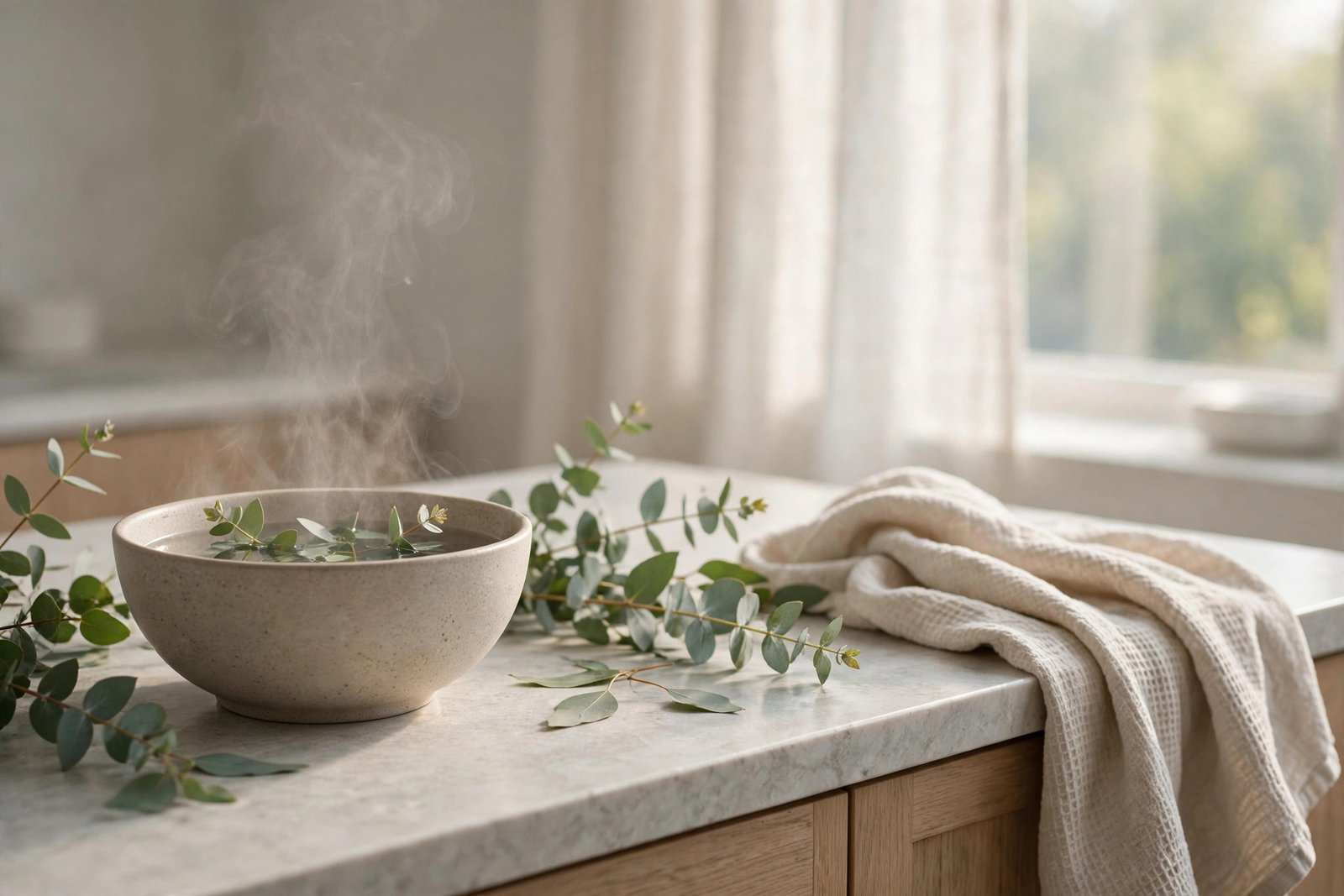
- Boil water, then let it cool slightly. Pour freshly boiled water into a large, stable bowl, then wait a minute or two so it is steaming but not violently bubbling. You want steam, not a scalding splash risk.
- Set the bowl on a solid table — never hold it in your lap, and never do this with a bowl balanced on a bed.
- Sit comfortably and lean over the bowl with your face roughly 10–12 inches above the water. Close your eyes.
- Drape a towel over your head and the bowl to make a loose tent that keeps the steam in.
- Breathe slowly and normally for 10–15 minutes. If it feels too hot, lift the towel edge, move back, or stop — comfort is the guide.
- Repeat up to 2–3 times a day while congestion is at its worst.
The Shower Alternative (Safer for Most People)
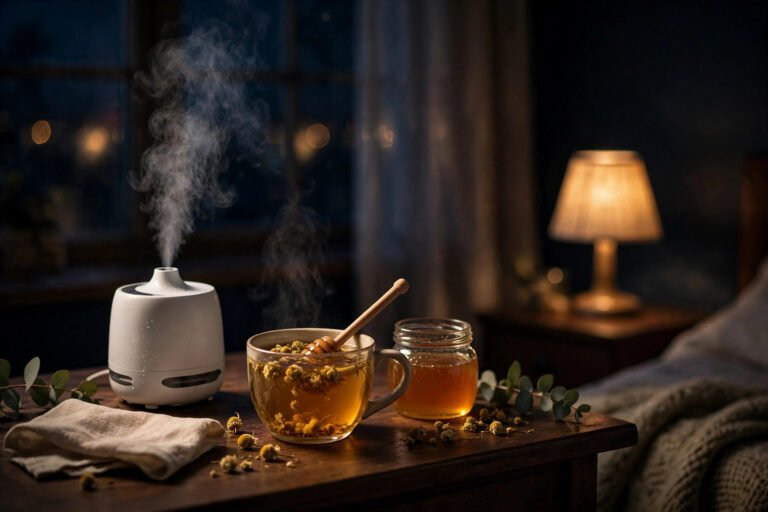
A hot, steamy shower delivers the same moist air with almost no scald risk. Run the shower hot with the bathroom door closed, sit or stand in the steam for 10–15 minutes, and breathe deeply. This is the better option for older children, anyone unsteady on their feet, and anyone who finds the bowl method claustrophobic. A personal warm-mist steamer or a cool-mist humidifier in the bedroom overnight are other low-risk ways to keep air moist — with a humidifier, clean it exactly as the manufacturer directs, because a dirty humidifier can blow mold and bacteria into the air.
Should You Add Eucalyptus or Other Oils?
Plain steam works on its own. Adding a drop or two of eucalyptus or menthol products to the water is popular, and the strong scent can create a sensation of clearer breathing, but there are real cautions:
- Never use essential oils in steam for babies and young children — strong vapors can irritate small airways and even trigger breathing problems.
- Asthma: Scented steam is a known trigger for some people with asthma. If your airways are reactive, stick to plain steam or the shower method.
- Never ingest essential oils, and keep bottles away from children — eucalyptus oil is toxic if swallowed.
- Vapor rubs are for the chest and neck skin only, never inside the nostrils, and not for children under 2.
Safety Rules That Matter
- Scalds are the number-one injury from home steam inhalation, especially in children. Keep bowls of hot water completely away from kids; use the shower or a humidifier for them instead.
- Keep pets out of the room while you steam.
- Use a stable surface, and move the bowl before standing up — dizzy spells happen when you are congested and warm.
- Stop if you feel lightheaded, your skin stings, or breathing feels harder rather than easier.
- Contact lens wearers: remove lenses first, as steam and heat can be uncomfortable with them in.
Getting the Most From Each Session
A few small details separate a genuinely helpful session from a wasted one. Start the session when your congestion feels at its worst — typically in the evening — so the relief carries you toward sleep. Blow your nose gently right after the session, while mucus is at its loosest; blowing hard, one nostril pinched shut, can push mucus into the ears and cause ear discomfort, so keep it gentle and do both sides.
Hydrate around the session too: a glass of water or a warm drink before and after helps keep mucus thin throughout the system, not just in the nose. Keep tissues, water and a small towel within reach so you are not getting up mid-session and losing the steam tent. If your symptoms are mainly on one side, that is common in colds — your nasal cycle naturally alternates which side is more swollen, and lying on one side will make the lower side feel worse. Steam treats both sides at once, which is part of why it feels so relieving.
Finally, manage expectations about duration: relief typically lasts one to a few hours rather than all day. That is still valuable — especially the session before bed — but it is why steam is best used regularly through the worst two or three days of a cold rather than once and forgotten.
Remedies That Pair Well with Steam
Congestion rarely travels alone, so steam works best as part of a small routine:
- Saline rinse or spray: A saltwater nasal rinse (with sterile, distilled, or previously boiled-and-cooled water — never straight tap water in a rinse device) physically washes out mucus and allergens and is one of the best-supported home measures for sinus pressure.
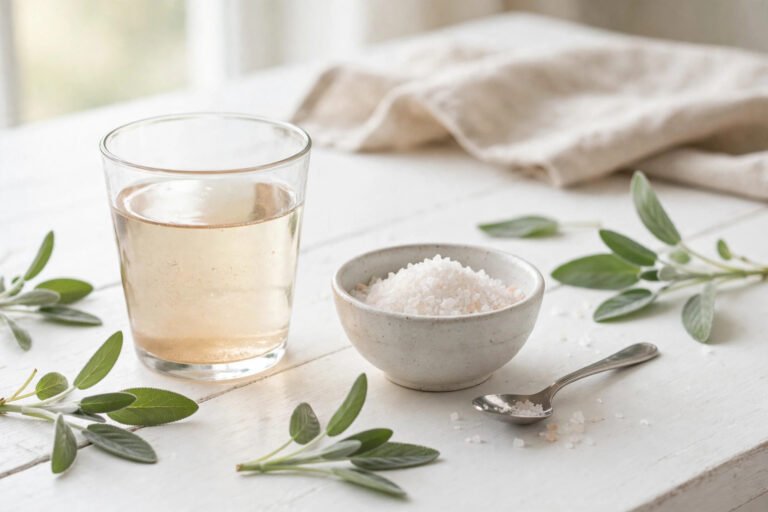
- For the sore throat that often comes with it: A salt water gargle for a sore throat soothes the throat while steam handles the nose.
- For a cough: Warm drinks with honey are a proven comfort — see our guide to honey for cough for how to use it and the important age warning (never give honey to babies under 12 months).
- Fluids and rest: Staying hydrated keeps mucus thinner everywhere, and no remedy outperforms sleep for recovery.
- Elevate your head: An extra pillow or a raised bed head reduces nighttime pooling and pressure.
Blocked Nose or Sinus Infection?
Most congestion is a viral cold. Bacterial sinusitis becomes more likely when symptoms last more than 10 days without improving, when you get better and then sharply worse again, or when you have high fever with thick discolored discharge and facial pain for several days running. Yellow or green mucus alone, in the first few days, is normal for a cold and does not by itself mean you need antibiotics. Steam can keep you comfortable in all of these situations, but only a clinician can judge whether an infection needs treatment.
See a Doctor If…
- Symptoms last longer than 10 days without getting better, or improve and then worsen again.
- You have a fever above 102°F, or fever lasting more than 3 days.
- There is swelling around the eyes or forehead, vision changes, or a severe headache.
- You have trouble breathing, wheezing, or chest pain.
- Discharge is bloody, or congestion is only on one side and persistent.
- The patient is a baby under 3 months with a fever, or a child who is not drinking fluids.
Medical Disclaimer
Disclaimer: The information in this article is for general educational purposes only and is not medical advice. Home remedies are not a substitute for professional diagnosis or treatment, and natural ingredients can still cause allergies or interact with medicines. Talk to your doctor about congestion or sinus symptoms that are severe, prolonged or unusual for you.
Frequently Asked Questions
How many times a day can I do steam inhalation?
Two to three sessions a day, 10–15 minutes each, is a sensible maximum during the worst days of a cold. More sessions do not clear congestion faster and raise your scald risk with repeated bowls of hot water. A humidifier or steamy shower can provide gentler moisture between sessions.
Is steam inhalation safe for children?
The bowl method is not safe for children because of scald risk — spilled bowls of hot water are a common cause of serious burns. For kids, use a steamy bathroom during a warm shower, a clean cool-mist humidifier, and saline spray instead, and never add essential oils to steam for young children.
Does steam actually cure a sinus infection?
No. Steam eases congestion and pressure and loosens mucus, which makes you feel better, but it does not eliminate viruses or bacteria. Most sinus congestion is viral and clears on its own; persistent or worsening symptoms after 10 days need a medical opinion.
What can I add to the water for extra relief?
Plain water is enough. Adults without asthma sometimes add a drop of eucalyptus oil or a menthol vapor product for the sensation of clearer airways, but these are optional extras, not stronger medicine. Skip additives entirely for children, and stop if any scent makes your breathing feel tighter.
Why does my nose feel more blocked when I lie down?
When you stand, gravity helps blood and fluid drain from the nasal tissues; lying flat lets them pool, so swollen tissue swells more. That is why congestion peaks at night. Propping your head up with an extra pillow and running a humidifier in the bedroom both help.