
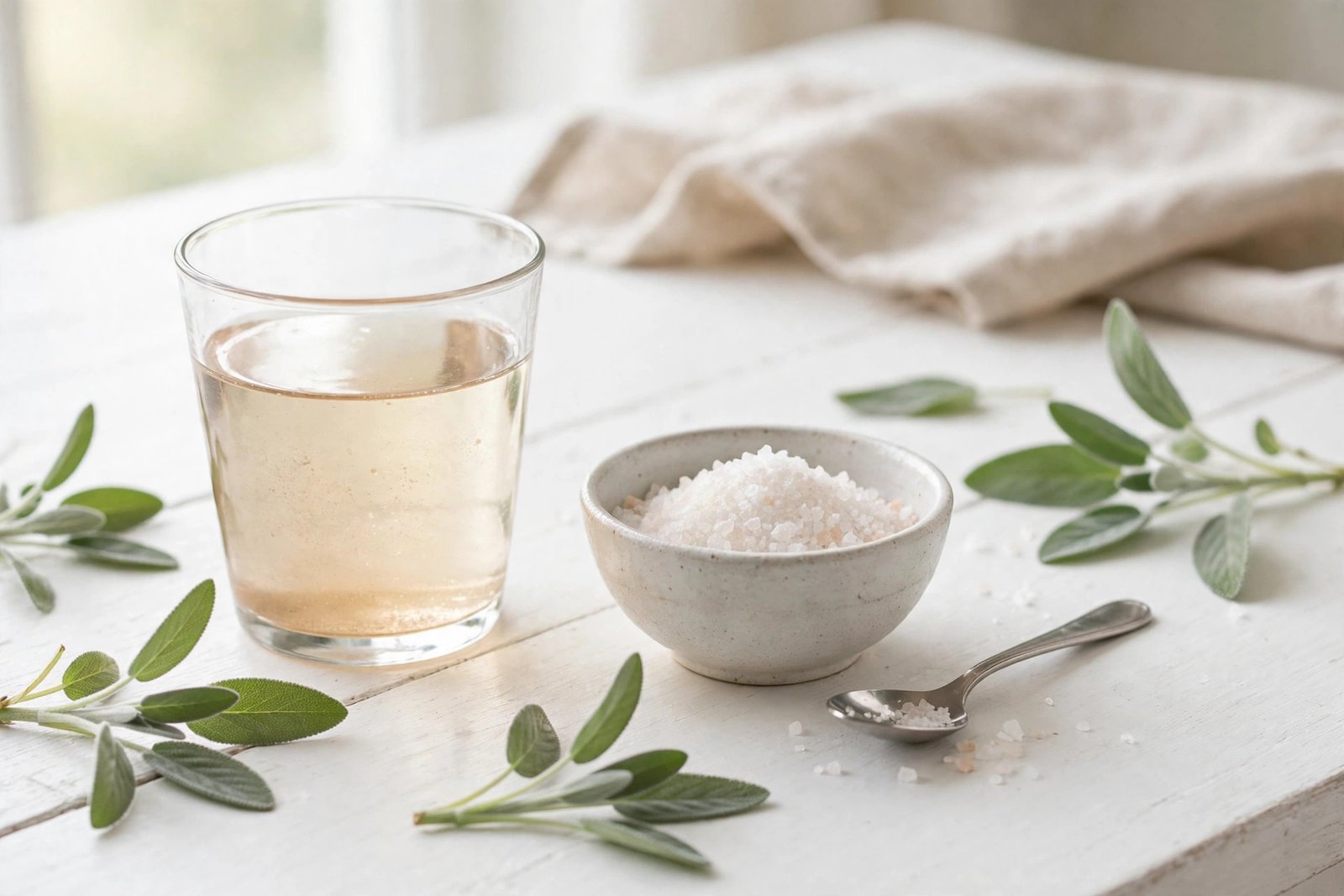
If your grandmother ever told you to gargle with warm salt water when your throat hurt, she was passing down one of the oldest — and still most recommended — home remedies in existence. Doctors, dentists and pharmacists suggest it to this day, not because it is a powerful medicine, but because it is simple, cheap, gentle, and genuinely helpful for easing the discomfort of a sore throat while your body heals.
Like every home remedy, though, it has real limits. A salt water gargle does not cure the infection causing your sore throat, and using it the wrong way (too salty, too hot, or swallowed) can make things worse instead of better. This guide explains how gargling works, the exact method to follow, what it can realistically do for you, and the warning signs that mean a sore throat needs a doctor, not a gargle.
How a Salt Water Gargle Actually Works
It Draws Out Excess Fluid
When your throat is sore, the tissues at the back of it are usually inflamed and slightly swollen with fluid. Salt water is more concentrated than the fluid in those tissues, so through osmosis it gently pulls some of that excess fluid out. Less swelling means less of that raw, tight, “swallowing sandpaper” feeling. This is the same basic reason salt has been used for centuries to draw moisture out of things.
It Loosens Mucus and Washes Away Irritants
Gargling physically rinses the back of your throat. The bubbling action helps loosen thick mucus, and the water washes away irritants sitting on the throat’s surface — things like dust, pollen, dry-air debris and the drip from a stuffy nose. When postnasal drip from a cold is what’s irritating your throat, this rinsing effect alone can bring noticeable relief, and it pairs well with warm drinks that keep the throat moist, such as a simple peppermint tea.
It Creates a Less Friendly Environment for Germs
A salty rinse temporarily makes the throat’s surface a less comfortable place for some bacteria and viruses to linger. Be honest with yourself about the scale of this effect, though: it is mild and temporary, more like tidying a room than disinfecting it. Gargling may support your body’s own defenses at the surface, but it does not sterilize your throat and it does not treat an established infection deeper in the tissues.
The Benefits, Stated Realistically
- Soothes pain and rawness. Most people feel relief within minutes, especially from the dry, scratchy soreness of a common cold.
- Helps with mucus and postnasal drip. The rinse thins and clears the mucus coating the throat.
- Supports healing after dental work or mouth sores. Dentists commonly suggest gentle salt water rinses after extractions and for minor mouth irritation, because they clean without the sting of alcohol-based mouthwash.
- Costs almost nothing and is always available. Salt and warm water are in nearly every US kitchen — no pharmacy trip at midnight.
- Safe alongside other measures. Gargling does not interact with medicines, rest, fluids or warm soothing drinks like the ones in our guide to lemon water, so it fits easily into a normal cold-care routine.
How to Gargle: The Correct Method
The standard mix recommended by clinics and dental offices is simple:
- Stir ¼ to ½ teaspoon of regular table salt into 8 ounces (1 cup) of warm water until it fully dissolves.
- The water should feel comfortably warm — not hot. Water that is too hot can scald already irritated tissue, and warm water dissolves salt faster and feels more soothing than cold.
Then follow these steps:
- Take a comfortable sip — enough to gargle, not so much that you feel you might choke.
- Tilt your head back slightly and gargle at the back of your throat for about 20–30 seconds, letting the water bubble over the sore area.
- Spit it out. Do not swallow — the water now contains whatever it rinsed off, and swallowing extra salt water can upset your stomach.
- Repeat until the cup is finished.
- Gargle 2–3 times a day while your throat is sore, especially once in the morning and once before bed.
More salt is not better. A mixture that is too strong dries out and irritates the delicate lining of the throat, which is the opposite of what you want. If the gargle stings sharply, it is too salty or too hot — remake it weaker and cooler.
Variations — and What to Skip
The Only Variation Worth Mentioning
Some people add ¼ teaspoon of baking soda to the salt-and-water mix. This creates a mild rinse that some dentists suggest for mouth sores. It is optional; plain salt water does the main job for a sore throat.
What Not to Add
- Essential oils. They do not mix into water properly and can burn irritated tissue. Leave them out.
- Vinegar or strong acids. Acidic rinses can sting, irritate inflamed tissue and are hard on tooth enamel with repeated use.
- Hydrogen peroxide, undiluted. Unless a dentist has specifically told you to use a diluted peroxide rinse, skip it — it is easy to get the strength wrong.
If you want something warm and soothing between gargles, a cup of ginger tea is a classic cold-season choice; our article on ginger benefits explains more about why ginger is such a cold-weather staple.
The Limits: What a Gargle Cannot Do
This section matters as much as the method. A salt water gargle:
- Does not cure a cold or flu. These are viral illnesses that run their course, usually 7–10 days. Gargling eases one symptom — the sore throat — while your immune system does the real work.
- Does not treat strep throat. Strep is a bacterial infection that needs a medical test and, when confirmed, antibiotics. Gargling may make your throat feel better, but feeling better is not the same as the bacteria being gone, and untreated strep can lead to complications.
- Does not replace other care. Rest, fluids, and — when a doctor advises them — real medicines still matter. Gargling is one supportive measure in a routine, not the whole routine.
Think of it the way you would think of a warm compress on a sprain: comforting, helpful for symptoms, and worth doing — but not a cure.
Who Should Be Careful
- Young children. Gargling is only suitable for children who can reliably gargle and spit without swallowing or choking — usually around age 6 and up, and always with an adult present the first few times. For younger children, warm drinks and a pediatrician’s advice are the safer route.
- People on sodium-restricted diets. Most of the rinse is spat out, but small amounts are inevitably swallowed. If you have heart failure, kidney disease or high blood pressure managed with a strict low-sodium diet, ask your doctor before gargling several times a day.
- Anyone whose sore throat is getting worse. A remedy that stops helping — or symptoms that escalate after a few days — is a signal to get checked, not to gargle more often.
See a Doctor If…
- Your sore throat lasts longer than one week, or keeps coming back.
- You have a fever above 101°F (38.3°C), especially with no other cold symptoms — this combination can point to strep.
- You have difficulty swallowing, drooling, or cannot fully open your mouth.
- You have trouble breathing — seek urgent care immediately.
- One side of your throat hurts much more than the other, or you notice swelling in your neck or jaw.
- Hoarseness lasts more than two weeks.
- You develop a rash alongside the sore throat, or you have a weakened immune system.
Medical Disclaimer
Disclaimer: The information in this article is for general educational purposes only and is not medical advice. A salt water gargle is a traditional supportive remedy for easing sore throat discomfort; it does not diagnose, treat or cure any infection or disease. If you are concerned about a sore throat — yours or your child’s — consult a doctor or another qualified health professional.
Frequently Asked Questions
How often can I gargle with salt water?
Two to three times a day is the usual suggestion while your throat is sore. Gargling much more often than that, or with an overly strong mix, can dry out and irritate the throat lining. Morning and before bed are the most useful times for most people.
Should the water be warm or cold?
Warm. Warm water dissolves the salt completely, feels more soothing on inflamed tissue, and helps loosen mucus. Just make sure it is comfortably warm rather than hot — test it as you would a drink, and never gargle with water hot enough to sip only with difficulty.
Does salt water kill the bacteria that cause strep throat?
No. Gargling creates a temporarily salty environment at the throat’s surface and rinses away some surface debris, but it cannot eliminate a strep infection in the tissue. Strep throat needs a medical test and antibiotics when confirmed. Gargling is for comfort only.
Can my child gargle with salt water?
Children who are old enough to gargle and spit reliably — typically around age 6 or older — can use a mild salt water gargle with adult supervision. Younger children may swallow or inhale the water, so warm fluids and pediatric advice are better options for them.
Is it harmful if I accidentally swallow some?
Swallowing a small accidental sip is not dangerous for most people, but try to spit it all out: the rinse contains the mucus and debris it washed off, and swallowing a lot of salt water can cause nausea and add unnecessary sodium. The exception is people on strict sodium-restricted diets, who should ask their doctor first.





One Comment