

When a cough keeps you — or your child — awake at night, one of the simplest remedies is probably already in your kitchen cabinet: honey. This is not just folklore. Honey is one of the few home remedies that doctors and major health organizations actually mention for coughs, and in studies of nighttime coughing in children over one year old, honey has performed as well as some common over-the-counter cough ingredients.
That said, honey is not right for everyone, and it is not a treatment for the infection causing your cough. This guide explains how honey helps, the most effective ways to use it, the different types you will see in US stores, and — just as importantly — when to skip it completely.
Why Honey Helps a Cough
It Coats and Soothes the Throat
Honey is thick and syrupy, and that texture is a big part of why it works. As it slides down, it coats the irritated lining of the throat, protecting sensitive nerve endings that trigger the cough reflex. Substances that coat and soothe like this are called demulcents, and they help explain why a spoonful of honey can calm a tickly, dry cough faster than a glass of water.
It May Help Thin Mucus and Calm Irritation
Honey also encourages saliva production, which keeps the throat moist. It contains small amounts of antioxidants and has mild antibacterial properties in the jar, although once swallowed its main benefit for a cough is soothing rather than fighting germs. Parents in particular notice the practical benefit: children who take honey before bed tend to cough less through the night and sleep better — and so does everyone else in the house.
What the Research Says, Honestly
Reviews of multiple studies have found that honey likely reduces cough frequency and severity in children over 12 months, and it is often rated by parents as more helpful than no treatment. For adults, the evidence is thinner but supportive for upper respiratory infections. What honey does not do is cure the cold, flu or other infection behind the cough — most of those are viral and simply need time, rest and fluids.
The Best Ways to Take Honey for a Cough
Straight Off the Spoon
The simplest method: 1–2 teaspoons of honey, taken slowly, up to a few times a day and once before bed. Let it coat your throat rather than washing it straight down with water.
Honey and Warm Lemon Water
The classic combination: stir 1–2 teaspoons of honey and a squeeze of fresh lemon juice into a mug of warm (not boiling) water. Warm liquids themselves soothe the throat and help you stay hydrated, and lemon adds a pleasant tartness that many people find helps cut through mucus. If you are curious about lemon drinks more generally, our guide to lemon water benefits covers what they can and cannot do. Avoid very hot water, which can scald an already sore throat.
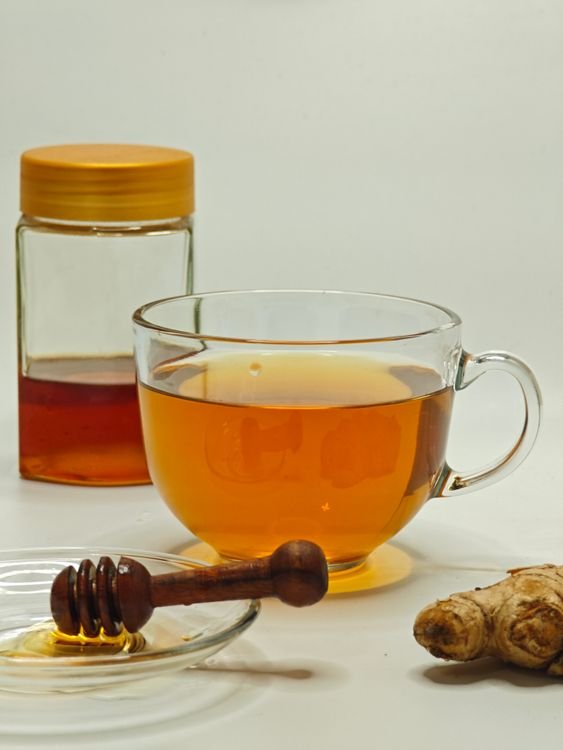
Honey Ginger Tea
Simmer a few slices of fresh ginger in water for 10 minutes, strain, let it cool slightly, then stir in honey. Ginger brings warmth and its own traditional reputation for settling the body during a cold — read more in our article on ginger benefits. Add the honey after the tea cools a little, since very high heat breaks down some of honey’s delicate compounds and, more importantly, makes the drink too hot for a sore throat.
Honey in Herbal Tea
Stirring honey into a caffeine-free herbal tea is another comfortable option for the evening. A warm cup of peppermint tea with honey is a popular choice, as the menthol aroma can make breathing feel easier while the honey coats the throat.
Types of Honey: Does It Matter?
- Regular store-bought honey (clover, wildflower) is fine for a cough and is what most people have at home.
- Raw honey is unfiltered or lightly filtered and may retain more trace compounds, but there is no strong proof it works better for coughs. It should still never be given to infants.
- Manuka honey from New Zealand is marketed for antibacterial strength and costs much more. For simply soothing a cough, standard honey does the job at a fraction of the price.
- Buckwheat honey is dark and strong-tasting; interestingly, the best-known children’s cough study used buckwheat honey, and its deeper flavor is a bonus for adults too.
When to Avoid Honey
Never for Babies Under 12 Months
This is the single most important rule in this article. Honey can contain spores of a bacterium that a baby’s immature digestive system cannot handle, which can cause infant botulism — a rare but serious illness. Do not give honey in any form — including in warm drinks or on a pacifier — to a child under one year old. This warning applies to raw and processed honey alike.
Use Carefully If You Have Diabetes
Honey is sugar. A teaspoon has roughly 6 grams of sugar and about 21 calories, and it raises blood glucose similarly to table sugar. If you have diabetes, count honey within your carbohydrate plan and check with your doctor about how often you use it.
Allergies and Other Cautions
- People allergic to bees or pollen can occasionally react to honey; stop if you notice itching, swelling or hives.
- Frequent spoonfuls of any sugary syrup are hard on teeth — rinse your mouth or brush after your bedtime dose.
- Honey soothes symptoms; it does not replace antibiotics when a doctor has prescribed them for a bacterial infection.
Honey vs. Over-the-Counter Cough Medicine
For a simple cold-related cough, honey compares surprisingly well. Many pediatric groups advise against over-the-counter cough and cold medicines for young children because of side effects and limited benefit, which is one reason honey (for children over one) is so often suggested by pediatricians. For adults, cough medicines can help you sleep, but they treat symptoms only — just like honey. Whichever you choose, drink plenty of fluids, rest, and use a humidifier if the air in your home is dry. Never combine multiple cough products without checking the labels, since many contain the same active ingredients.
Getting the Most From Honey: Practical Tips
- Time your last dose for bedtime. Night is when coughs feel worst — lying flat lets mucus pool and the throat dries out. A spoonful of honey about 30 minutes before bed, after brushing your teeth, gives it time to coat the throat where it works best.
- Pair it with fluids and rest. Honey works best as part of a simple routine: warm drinks through the day, plenty of water, a humidifier if your indoor air is dry, and as much rest as you can manage. No single spoonful compensates for a day of dry air and no fluids.
- If your honey has crystallized, do not throw it out. Crystallization is natural and does not mean the honey has spoiled — honey is famous for keeping almost indefinitely. Stand the jar in a bowl of warm water for a few minutes and it will turn liquid again. Avoid microwaving it, which overheats it unevenly.
- Store it at room temperature. Honey keeps best in a sealed jar in a cupboard, not the refrigerator, where it crystallizes faster. Always use a clean, dry spoon, since introducing water or crumbs into the jar can affect its quality over time.
- Check manufactured products too. Many “honey-flavored” cough syrups and lozenges contain little actual honey, plus sweeteners and flavorings. If a product appeals to you because of the honey, scan the ingredient list — real honey should appear near the top, not as a footnote.
See a Doctor If…
- Your cough lasts more than three weeks, or keeps coming back.
- You cough up blood, or thick green/yellow mucus with a high fever.
- You have chest pain, wheezing, shortness of breath or difficulty breathing — seek urgent care for breathing difficulty.
- A child’s cough includes a barking sound, rapid breathing, or the child is unusually drowsy or not drinking fluids.
- You have a weakened immune system, asthma or a chronic lung condition and develop a new cough.
Medical Disclaimer
Disclaimer: This article is for general educational purposes only and is not medical advice. Honey is a traditional home remedy for soothing coughs; it does not diagnose, treat or cure any disease. If you are concerned about a cough — yours or your child’s — consult a doctor or another qualified health professional.
Frequently Asked Questions
How much honey should I take for a cough?
For adults, 1–2 teaspoons taken slowly, a few times a day and before bed, is the amount usually suggested. Studies in children over one year typically used about 2 teaspoons (10 ml) before bed. More is not better — honey is still sugar.
Can I give honey to my 8-month-old for a cough?
No. Honey must never be given to babies under 12 months because of the risk of infant botulism. For coughs in infants, see your pediatrician, who can check for causes that need treatment.
Is raw honey better than regular honey for a cough?
There is no solid evidence that raw honey soothes a cough better than regular pasteurized honey. The coating, soothing effect is the main mechanism, and all honeys provide it. Choose one you like the taste of.
Does honey cure a cold?
No. Honey eases cough symptoms and can help you sleep better, but it does not shorten or cure a cold. Most colds resolve on their own in 7–10 days with rest and fluids.
Can I take honey with cough medicine?
Generally yes, honey is a food and does not interact with typical cough medicines. Still, check product labels, be mindful of total sugar intake, and ask a pharmacist if you take regular medication or are treating a child.





One Comment